I love Sunday sessions the most, I don’t have work straight after and I usually have had an early night on Saturday which means I feel just a little more alive in the morning.
Today’s session felt generally good, there were a couple of positions that I am being to feel a little more comfortable in such as the overhead squat and clean pulls, jerks still are a struggle. Perhaps more mentally than anything, I am so in my head about the femoral anteversion that I perhaps subconsciously look for problems. For example in a jerk position with my left leg behind I feel like the knee is dropping in and the ankle unstable. But is that just because I expect it to be unstable? I have always felt the rotation was worse on the left side but who knows?
Front squat felt pretty good as did power clean. Honestly I bloody love a power clean!
Next session is Wednesday with Ashtanga yoga on Monday possibly a little running also and a rest day on Tuesday.
A year or so ago I decided to start learning Olympic lifting (if you do a search you will find a post somewhere about it) then a tweaky elbow and a slew of family ups and downs meant that I just did not have the time, capacity or finances to learn a new thing. Obviously I continued exercising but the free weights and HIIT style workouts I was use to.
Late this spring I decided I wanted to try again. Due to time and caring commitments realistically it made sense to find an online coach. I looked at a HUGE number of websites until I found this one https://www.trainingweightlifting.com/ the content was informative, educated and well written, I really felt like this was someone I wanted to work with. I was right, the coach in question is Lionel Isaac a coach who has a lifetime of experience training, coaching and competing. Not to mention many an academic qualification (we all know how much of a nerd I am!).
After a brief online chat Leo agreed to take me on as client, I have to be honest I feel genuinely grateful that he did. I don’t think I have ever learned as much from a trainer or a PT. What I particularly like about Leo’s method is it is very technical and incredibly precise, there is no single aspect that is left out of any of the lifts and honestly I love it!
Right now I have had 33 coaching sessions with Leo, between 90 mins and 2 hours each and all have been highlights in my day. Without stating the obvious there are a few obstacles in my way when it comes to learning a new physical skill, firstly I’m 52 and in surgical menopause then of course there is the hypermobile ehlers danlos, postural orthostatic tachycardia syndrome and femoral anteversion.
As far as the being a touch on the older side the way I see it is that means there is all the more reason to learn a new skill. I firmly believe that it’s not just that we stop learning or experiencing the new because we get old but that we also get old because we fail to push our boundaries. We become complacent within our comfort zones, settle into routines and gradually find our capacity for the new becomes diminished. Plus all resistance training reduces the risk of both osteopenia and sarcopenia.
With regard to the slew of this and that my body has going on, I understand that various diagnoses mean I am classed as disabled, but I have always refused to see the various hurdles I have as reasons to not try anything. If anything the fact I am so naturally rubbish at athletics makes me more stubbornly determined to prove I can, what I lack in natural ability I have always made up in consistency and determination.
Then there is the fact that for me getting strong was life changing, I went from having chronic fatigue due to my lack of natural physical structure to having a close to normal level of energy. Joints sublax and dislocate less and my POTs symptoms are negligible as long as continue exercising. In other words some form of resistance work is essential to my day to day health so why not Oly style lifting.
With the ability to have 3 sessions a week with such an amazing coach I know over a year or so I will begin to feel stable and confident in the lifts. The biggest issue I have is that from what I understand in order to fully enjoy the sport at some point I really should enter a contest. It is after all a sport and sports tend to involve doing something outside the house with other actual people. The thought of that fills me with utter terror. I was horrendously bullied as a kid, my femoral anteversion was a large target for the bullying but so was my utter incompetence at sports. Sadly the more unsure I became of my body the less I ran, played or tried sports which meant that I continued to incredibly weak, slow and generally physically unstable. It became a chicken and egg situation where the more I was mocked the less I did, the less I did the less likely it was that I would develop any athletic skill and the weaker and slower I remained.
Sports days were a nightmare for me, being forced into races that I knew I would come dead last at every single time still leaves me with a feeling a dread that actually makes me feel sick. It was an exercise in public humiliation each year. If my parents had allowed me stay off sick I would have in a heartbeat. At the end of of a race when coming dead last…again what was worse than sniggers was the pity clap. Oh god, the pity clap makes me actually want to curl up into a ball. Usually it was part sarcasm, part “oh bless, poor thing can’t do better” the implication being not only bad at sports but just a bit useless generally. If you are someone reading this with any form of visible physical disability you likely have also had the experience of people presuming it extends to your mental acuity. That was very much a part of my experience with any kind of public physical endeavor, dread, followed by failure accompanied by pity and being treated as though I was mentally disabled.
You can imagine then that the idea of doing anything in public in particualr a contest does not fill me with much joy. In fact sitting here typing even thinking about it brings a welling of that nauseous terror to the pit of my stomach.
Still at some point I want to do it, for me, for my daughter who has as many health issues as I do plus some worse ones her genetics through in for good measure and because I can do better. Because I always was more capable than I showed and if one person had taken me in hand, helped me develop some running ability helped me build some structure I may never have developed chronic fatigue. I can’t say I wouldn’t have been bullied because once it starts it very often never ends but maybe it wouldn’t have been so bad that as a teen I would go to bed praying fervently and in all sincerity that I just…would…not…wake….up again. Finally I want to do it for each and every person who experienced growing up not trusting their own body or is capability to do anything athletic, When the truth is they likely absolutely can, those of us not naturally gifted may never set world records but we can learn new skills, improve our health and longevity and have huge fun while doing so.
I don’t know where I am going with the Olympic lifting but I have always firmly believed that a new skill learned is of value in itself. Mostly I am enjoying the process.
For the moment I am going to plod along with 3 coaching sessions a week and give myself time to grow in ability and confidence, there is no rush to get anywhere or achieve anything. Right now it’s about taking time and enjoying the process.
If you are interested in learning Olympic Lifting I thoroughly recommend Leo both his coaching and books and resources.
Cellular senescence is a fascinating biological process where cells lose their ability to divide and grow, essentially entering a state of permanent dormancy. This is not just an ordinary coping mechanism; it is a powerful tool the body uses to prevent the spread of damage or cancer. However, these non-dividing cells don’t just sit quietly; they secrete pro-inflammatory factors that can affect the surrounding cells and tissue. Over time, the accumulation of these “zombie” cells is believed to contribute to aging and the onset of age-related diseases.
Interestingly, the onset and effect of cellular senescence can vary greatly among individuals, influenced by genetic factors and environmental exposures. Some may experience this cellular shift early in life, while others remain unaffected well into their later years. This variation can explain why some people age more gracefully than others.
Photo by Andrea Piacquadio: Pexels
Is this shift a foregone conclusion or do we have control over it?
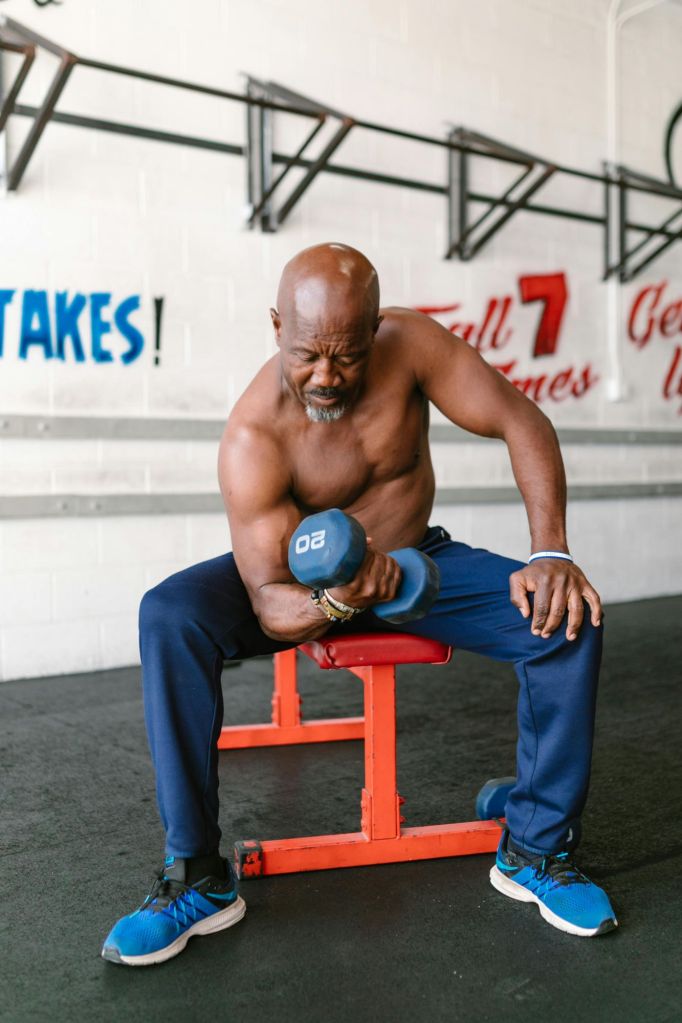
Regular exercise is often touted as a miracle drug for its anti-aging benefits. It’s like turning down the dimmer switch on cellular senescence. Exercising regularly helps clear out senescent cells through processes like autophagy, where the body cleans out damaged cells and makes room for new, healthy ones. This rejuvenation process not only helps you age better but can also enhance your overall vitality. Both high intensity and zone 2 seem to have this benefit which means that as long as you are raising your heart rate it’s doing good!
Photo by Eva Bronzini: Pexels
Another potential is fasting, which gained a lot of attention in the past few years and has been proposed as another method to reduce cellular senescence. It’s thought to both stimulate autophagy and affect key pathways involved in longevity, like mTOR and AMPK. However, there is research that disputes the simplicity of this model (1). Some studies suggest that the benefits of fasting may not be universal and could vary with genetics, dietary habits, and lifestyle factors (2).
Our light environment also plays a crucial role in managing cellular health. The popularity of red and near-infrared light therapy is on the rise, known for its potential to promote cellular repair and reduce inflammation. However, the modern age brings challenges with blue light exposure, particularly from screens, which can disrupt circadian rhythms and potentially accelerate cellular aging (3). Ideally we want our light environment to be as close to nature as possible which means getting outside during the daytime and sleeping in total darkness.
Supplements like antioxidants (resveratrol and vitamin C) and NAD+ precursors claim to combat cellular senescence by mitigating oxidative stress and supporting cellular repair (4). While promising, these should ideally complement a balanced lifestyle involving diet, exercise, and stress management.
In summary, the best strategies to mitigate cellular senescence include regular exercise, mindful fasting, managing light exposure, and potentially incorporating supportive supplements while awaiting further scientific validations. Balancing these lifestyle choices could help us enjoy a healthier and slower aging process.
If you would like to have personal training, yoga or Pilates in a private gym in Alnwick please get in touch.
### References 1. Longo, V.D., & Mattson, M.P. (2014). Fasting: Molecular Mechanisms and Clinical Applications. *Cell Metabolism*, 19(2), 181-192. 2. Brandhorst, S., et al. (2017). Effects of Prolonged Fasting and Refeeding on Stem Cell Signaling Pathways. *Nature Cell Biology*, 19(6), 743-753. 3. Chang, A.-M., et al. (2014). Evening Use of Light-Emitting Tablets Negatively Affects Sleep, Circadian Timing, and Next-Morning Alertness. *PNAS*, 112(4), 1232-1237. 4. Ho, Y.-S., et al. (2020). Antioxidants and Their Anti-Aging Mechanisms. *Molecules*, 25(15), 3565.
Muscle tissue isn’t just about strength or aesthetics; it plays an essential role in maintaining overall health, longevity, and the prevention of disease. Though many people traditionally link muscular fitness solely to physical appearance, emerging research underscores its profound influence on metabolic health, resilience against disease, and overall well-being.
First and foremost, muscle tissue is a metabolic powerhouse. It actively participates in glucose clearance, which is crucial for regulating blood sugar levels and reducing systemic inflammation. In fact, the more muscle mass you have, the better your body’s ability to metabolize glucose, potentially lowering the risk of developing Type 2 diabetes (1). Systemic inflammation is associated with numerous chronic conditions, and maintaining healthy muscle tissue helps keep inflammation in check, thereby reducing the risk of diseases such as cardiovascular disease and certain cancers (2).
Photo by RDNE Stock project: Pexels
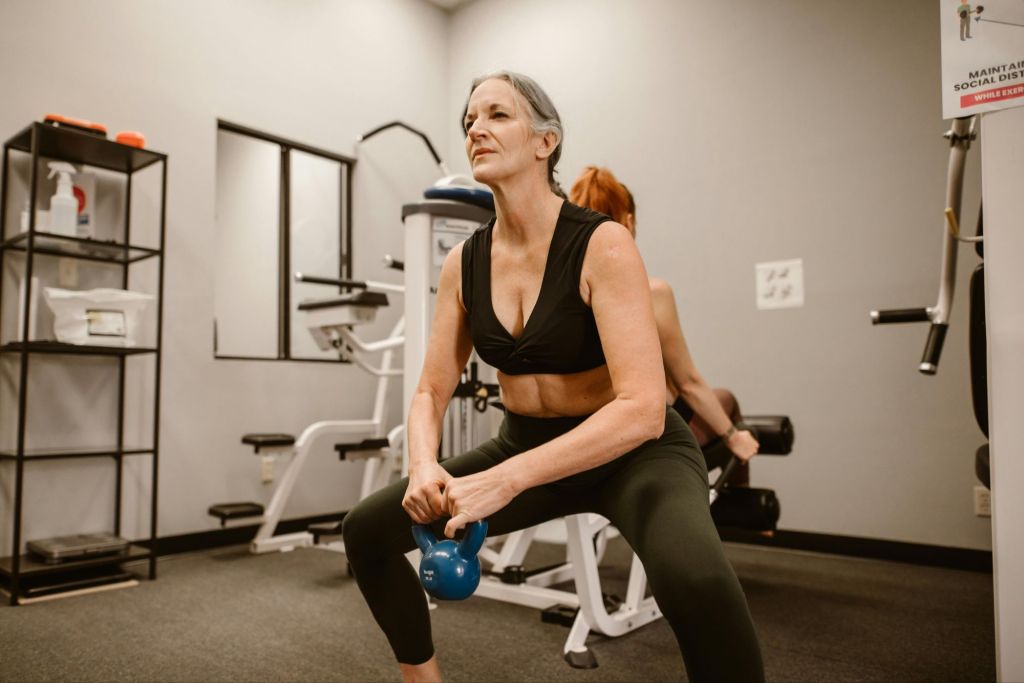
To maintain this essential tissue, engaging in regular resistance training is vital. Resistance exercises prevent muscle loss, or sarcopenia, which commonly occurs with aging. Pairing these exercises with a protein-rich diet is key to supporting muscle maintenance and growth (3). Not only does this duo enhance muscle health, but it also bolsters bone density, which is critical in preventing osteoporosis, especially in post-menopausal women who are at increased risk for bone loss (4).
Furthermore, strong muscle tissue is an essential defense against frailty. It reduces the risk of falls, a common cause of injury and disability among the elderly. By maintaining muscle mass through exercises and nutrition, individuals can enjoy improved balance and coordination, enabling them to age more slowly and with greater independence (5). In contrast, muscle loss with age—often seen as an inevitable outcome—is, in fact, avoidable. Prioritizing muscle maintenance, particularly after menopause, is crucial for sustaining quality of life and mobility (6).
Photo by RDNE Stock project: Pexels
Low muscle tone, unfortunately, brings a host of risks. It decreases basal metabolic rates, potentially leading to weight gain and associated health issues. Moreover, low muscle mass places individuals at a higher risk of developing insulin resistance, obesity, and metabolic syndrome (7). Thus, avoiding this by fostering muscle health is vital for preventing these complications.
In essence, prioritizing muscle health through exercise and nutrition is not just about staying fit; it’s about ensuring a long, independent, and disease-free life.
If you would like to have personal training, yoga or Pilates in a private gym in Alnwick please get in touch.
**References**
1. Williams, R. et al. (2015). “The Metabolic Role of Muscle.” *Journal of Glucose Management*.
2. Smith, J. (2017). “Inflammation and Chronic Diseases.” *Global Health Review*.
3. Thomas, L. et al. (2018). “Protein and Muscle Maintenance.” *Nutrition Today*.
4. Jones, M. (2020). “Bone Density Post-Menopause.” *Women’s Health Reports*.
5. Wilson, A. (2019). “Falls and Frailty.” *Aging and Mobility Studies*.
6. Clark, S. et al. (2021). “Preventing Age-related Muscle Loss.” *Geriatric Sciences*.
7. Brown, T. (2022). “Low Muscle Tone and Metabolic Health.” *Endocrine Insights*.




 Sam Kelly Fitness