I love Sunday sessions the most, I don’t have work straight after and I usually have had an early night on Saturday which means I feel just a little more alive in the morning.
Today’s session felt generally good, there were a couple of positions that I am being to feel a little more comfortable in such as the overhead squat and clean pulls, jerks still are a struggle. Perhaps more mentally than anything, I am so in my head about the femoral anteversion that I perhaps subconsciously look for problems. For example in a jerk position with my left leg behind I feel like the knee is dropping in and the ankle unstable. But is that just because I expect it to be unstable? I have always felt the rotation was worse on the left side but who knows?
Front squat felt pretty good as did power clean. Honestly I bloody love a power clean!
Next session is Wednesday with Ashtanga yoga on Monday possibly a little running also and a rest day on Tuesday.
A year or so ago I decided to start learning Olympic lifting (if you do a search you will find a post somewhere about it) then a tweaky elbow and a slew of family ups and downs meant that I just did not have the time, capacity or finances to learn a new thing. Obviously I continued exercising but the free weights and HIIT style workouts I was use to.
Late this spring I decided I wanted to try again. Due to time and caring commitments realistically it made sense to find an online coach. I looked at a HUGE number of websites until I found this one https://www.trainingweightlifting.com/ the content was informative, educated and well written, I really felt like this was someone I wanted to work with. I was right, the coach in question is Lionel Isaac a coach who has a lifetime of experience training, coaching and competing. Not to mention many an academic qualification (we all know how much of a nerd I am!).
After a brief online chat Leo agreed to take me on as client, I have to be honest I feel genuinely grateful that he did. I don’t think I have ever learned as much from a trainer or a PT. What I particularly like about Leo’s method is it is very technical and incredibly precise, there is no single aspect that is left out of any of the lifts and honestly I love it!
Right now I have had 33 coaching sessions with Leo, between 90 mins and 2 hours each and all have been highlights in my day. Without stating the obvious there are a few obstacles in my way when it comes to learning a new physical skill, firstly I’m 52 and in surgical menopause then of course there is the hypermobile ehlers danlos, postural orthostatic tachycardia syndrome and femoral anteversion.
As far as the being a touch on the older side the way I see it is that means there is all the more reason to learn a new skill. I firmly believe that it’s not just that we stop learning or experiencing the new because we get old but that we also get old because we fail to push our boundaries. We become complacent within our comfort zones, settle into routines and gradually find our capacity for the new becomes diminished. Plus all resistance training reduces the risk of both osteopenia and sarcopenia.
With regard to the slew of this and that my body has going on, I understand that various diagnoses mean I am classed as disabled, but I have always refused to see the various hurdles I have as reasons to not try anything. If anything the fact I am so naturally rubbish at athletics makes me more stubbornly determined to prove I can, what I lack in natural ability I have always made up in consistency and determination.
Then there is the fact that for me getting strong was life changing, I went from having chronic fatigue due to my lack of natural physical structure to having a close to normal level of energy. Joints sublax and dislocate less and my POTs symptoms are negligible as long as continue exercising. In other words some form of resistance work is essential to my day to day health so why not Oly style lifting.
With the ability to have 3 sessions a week with such an amazing coach I know over a year or so I will begin to feel stable and confident in the lifts. The biggest issue I have is that from what I understand in order to fully enjoy the sport at some point I really should enter a contest. It is after all a sport and sports tend to involve doing something outside the house with other actual people. The thought of that fills me with utter terror. I was horrendously bullied as a kid, my femoral anteversion was a large target for the bullying but so was my utter incompetence at sports. Sadly the more unsure I became of my body the less I ran, played or tried sports which meant that I continued to incredibly weak, slow and generally physically unstable. It became a chicken and egg situation where the more I was mocked the less I did, the less I did the less likely it was that I would develop any athletic skill and the weaker and slower I remained.
Sports days were a nightmare for me, being forced into races that I knew I would come dead last at every single time still leaves me with a feeling a dread that actually makes me feel sick. It was an exercise in public humiliation each year. If my parents had allowed me stay off sick I would have in a heartbeat. At the end of of a race when coming dead last…again what was worse than sniggers was the pity clap. Oh god, the pity clap makes me actually want to curl up into a ball. Usually it was part sarcasm, part “oh bless, poor thing can’t do better” the implication being not only bad at sports but just a bit useless generally. If you are someone reading this with any form of visible physical disability you likely have also had the experience of people presuming it extends to your mental acuity. That was very much a part of my experience with any kind of public physical endeavor, dread, followed by failure accompanied by pity and being treated as though I was mentally disabled.
You can imagine then that the idea of doing anything in public in particualr a contest does not fill me with much joy. In fact sitting here typing even thinking about it brings a welling of that nauseous terror to the pit of my stomach.
Still at some point I want to do it, for me, for my daughter who has as many health issues as I do plus some worse ones her genetics through in for good measure and because I can do better. Because I always was more capable than I showed and if one person had taken me in hand, helped me develop some running ability helped me build some structure I may never have developed chronic fatigue. I can’t say I wouldn’t have been bullied because once it starts it very often never ends but maybe it wouldn’t have been so bad that as a teen I would go to bed praying fervently and in all sincerity that I just…would…not…wake….up again. Finally I want to do it for each and every person who experienced growing up not trusting their own body or is capability to do anything athletic, When the truth is they likely absolutely can, those of us not naturally gifted may never set world records but we can learn new skills, improve our health and longevity and have huge fun while doing so.
I don’t know where I am going with the Olympic lifting but I have always firmly believed that a new skill learned is of value in itself. Mostly I am enjoying the process.
For the moment I am going to plod along with 3 coaching sessions a week and give myself time to grow in ability and confidence, there is no rush to get anywhere or achieve anything. Right now it’s about taking time and enjoying the process.
If you are interested in learning Olympic Lifting I thoroughly recommend Leo both his coaching and books and resources.
Cellular senescence is a fascinating biological process where cells lose their ability to divide and grow, essentially entering a state of permanent dormancy. This is not just an ordinary coping mechanism; it is a powerful tool the body uses to prevent the spread of damage or cancer. However, these non-dividing cells don’t just sit quietly; they secrete pro-inflammatory factors that can affect the surrounding cells and tissue. Over time, the accumulation of these “zombie” cells is believed to contribute to aging and the onset of age-related diseases.
Interestingly, the onset and effect of cellular senescence can vary greatly among individuals, influenced by genetic factors and environmental exposures. Some may experience this cellular shift early in life, while others remain unaffected well into their later years. This variation can explain why some people age more gracefully than others.
Photo by Andrea Piacquadio: Pexels
Is this shift a foregone conclusion or do we have control over it?
Regular exercise is often touted as a miracle drug for its anti-aging benefits. It’s like turning down the dimmer switch on cellular senescence. Exercising regularly helps clear out senescent cells through processes like autophagy, where the body cleans out damaged cells and makes room for new, healthy ones. This rejuvenation process not only helps you age better but can also enhance your overall vitality. Both high intensity and zone 2 seem to have this benefit which means that as long as you are raising your heart rate it’s doing good!
Photo by Eva Bronzini: Pexels
Another potential is fasting, which gained a lot of attention in the past few years and has been proposed as another method to reduce cellular senescence. It’s thought to both stimulate autophagy and affect key pathways involved in longevity, like mTOR and AMPK. However, there is research that disputes the simplicity of this model (1). Some studies suggest that the benefits of fasting may not be universal and could vary with genetics, dietary habits, and lifestyle factors (2).
Our light environment also plays a crucial role in managing cellular health. The popularity of red and near-infrared light therapy is on the rise, known for its potential to promote cellular repair and reduce inflammation. However, the modern age brings challenges with blue light exposure, particularly from screens, which can disrupt circadian rhythms and potentially accelerate cellular aging (3). Ideally we want our light environment to be as close to nature as possible which means getting outside during the daytime and sleeping in total darkness.
Supplements like antioxidants (resveratrol and vitamin C) and NAD+ precursors claim to combat cellular senescence by mitigating oxidative stress and supporting cellular repair (4). While promising, these should ideally complement a balanced lifestyle involving diet, exercise, and stress management.
In summary, the best strategies to mitigate cellular senescence include regular exercise, mindful fasting, managing light exposure, and potentially incorporating supportive supplements while awaiting further scientific validations. Balancing these lifestyle choices could help us enjoy a healthier and slower aging process.
If you would like to have personal training, yoga or Pilates in a private gym in Alnwick please get in touch.
### References 1. Longo, V.D., & Mattson, M.P. (2014). Fasting: Molecular Mechanisms and Clinical Applications. *Cell Metabolism*, 19(2), 181-192. 2. Brandhorst, S., et al. (2017). Effects of Prolonged Fasting and Refeeding on Stem Cell Signaling Pathways. *Nature Cell Biology*, 19(6), 743-753. 3. Chang, A.-M., et al. (2014). Evening Use of Light-Emitting Tablets Negatively Affects Sleep, Circadian Timing, and Next-Morning Alertness. *PNAS*, 112(4), 1232-1237. 4. Ho, Y.-S., et al. (2020). Antioxidants and Their Anti-Aging Mechanisms. *Molecules*, 25(15), 3565.
Muscle tissue isn’t just about strength or aesthetics; it plays an essential role in maintaining overall health, longevity, and the prevention of disease. Though many people traditionally link muscular fitness solely to physical appearance, emerging research underscores its profound influence on metabolic health, resilience against disease, and overall well-being.
First and foremost, muscle tissue is a metabolic powerhouse. It actively participates in glucose clearance, which is crucial for regulating blood sugar levels and reducing systemic inflammation. In fact, the more muscle mass you have, the better your body’s ability to metabolize glucose, potentially lowering the risk of developing Type 2 diabetes (1). Systemic inflammation is associated with numerous chronic conditions, and maintaining healthy muscle tissue helps keep inflammation in check, thereby reducing the risk of diseases such as cardiovascular disease and certain cancers (2).
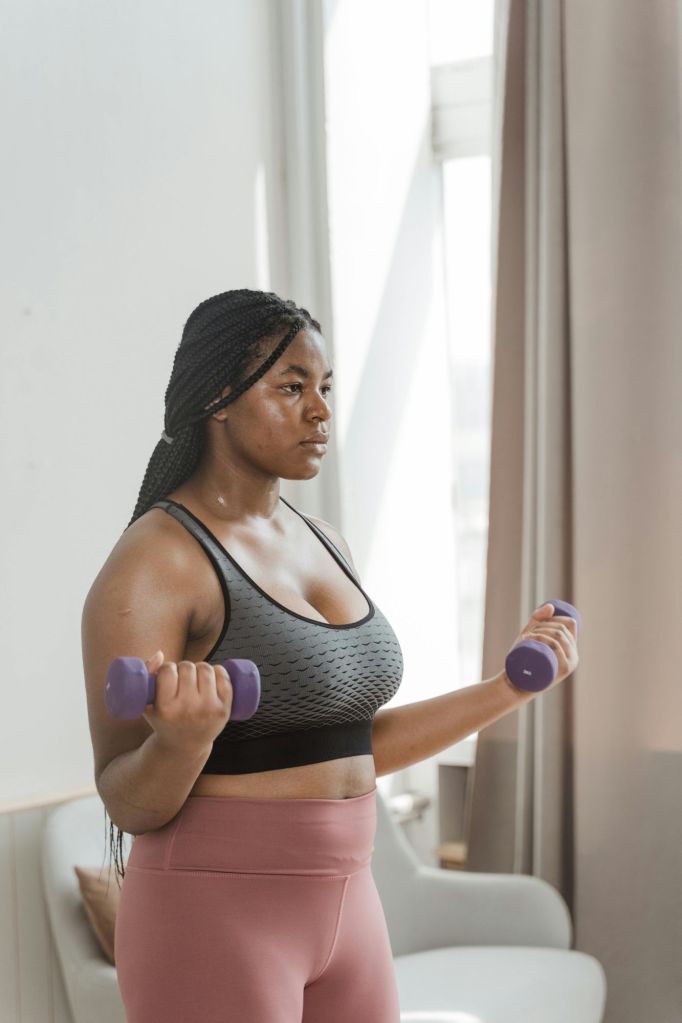
Photo by RDNE Stock project: Pexels
To maintain this essential tissue, engaging in regular resistance training is vital. Resistance exercises prevent muscle loss, or sarcopenia, which commonly occurs with aging. Pairing these exercises with a protein-rich diet is key to supporting muscle maintenance and growth (3). Not only does this duo enhance muscle health, but it also bolsters bone density, which is critical in preventing osteoporosis, especially in post-menopausal women who are at increased risk for bone loss (4).
Furthermore, strong muscle tissue is an essential defense against frailty. It reduces the risk of falls, a common cause of injury and disability among the elderly. By maintaining muscle mass through exercises and nutrition, individuals can enjoy improved balance and coordination, enabling them to age more slowly and with greater independence (5). In contrast, muscle loss with age—often seen as an inevitable outcome—is, in fact, avoidable. Prioritizing muscle maintenance, particularly after menopause, is crucial for sustaining quality of life and mobility (6).
Photo by RDNE Stock project: Pexels
Low muscle tone, unfortunately, brings a host of risks. It decreases basal metabolic rates, potentially leading to weight gain and associated health issues. Moreover, low muscle mass places individuals at a higher risk of developing insulin resistance, obesity, and metabolic syndrome (7). Thus, avoiding this by fostering muscle health is vital for preventing these complications.
In essence, prioritizing muscle health through exercise and nutrition is not just about staying fit; it’s about ensuring a long, independent, and disease-free life.
If you would like to have personal training, yoga or Pilates in a private gym in Alnwick please get in touch.
**References**
1. Williams, R. et al. (2015). “The Metabolic Role of Muscle.” *Journal of Glucose Management*.
2. Smith, J. (2017). “Inflammation and Chronic Diseases.” *Global Health Review*.
3. Thomas, L. et al. (2018). “Protein and Muscle Maintenance.” *Nutrition Today*.
4. Jones, M. (2020). “Bone Density Post-Menopause.” *Women’s Health Reports*.
5. Wilson, A. (2019). “Falls and Frailty.” *Aging and Mobility Studies*.
6. Clark, S. et al. (2021). “Preventing Age-related Muscle Loss.” *Geriatric Sciences*.
7. Brown, T. (2022). “Low Muscle Tone and Metabolic Health.” *Endocrine Insights*.
Perhaps like a lot of people in the new year you are thinking about dusting off your trainers and getting back into exercise? The question is how do you set yourself up for success? Whether you’re returning after a long break or just revamping your routine, it’s crucial to approach it thoughtfully and safely.
First things first—be gentle with yourself as you restart your fitness journey. Begin with light workouts or physical activities that you genuinely enjoy, like cycling, dancing in the kitchen swimming, or even brisk walks. The key is to ease your body back into the rhythm of regular exercise without overwhelming it. If you are wanting to learn a new skill such as yoga, Pilates or start resistance training with free weights I would strongly recommend classes or a trainer. That way you learn the correct form and exercises can be adapted to your needs. This is especially important if you have old or existing injuries or underlying health conditions. Nothing ruins a good intention like an injury.
Photo by Kampus Production: Pexels
As you get comfortable, you’ll want to introduce a concept known as progressive overload. This means gradually increasing the weight, intensity, or duration of your workouts to continue challenging your muscles and seeing improvements. It’s a crucial strategy to keep progressing, but always listen to your body and adjust accordingly. If you don’t incorporate progressive overload at best you stop progressing but at worst you can even regress. The body is incredibly good at adapting which means if you don’t continue to challenge it, your body will adapt to the stimulation so we’ll the starting program will no longer do much. If you are working with a trainer or coach they will handle this aspect for you.
Photo by Marcus Chan: Pexels
After a while you might lose the motivation to continue, you will I’m sure have very personal reasons as to why you started it’s worth remembering this initial motivation. Here are a few potential reasons to move that hopefully will keep you motivated.
1. **Bone Health**: Regular exercise, particularly weight-bearing activities like walking and weightlifting, is essential for maintaining bone density. This helps prevent conditions like osteoporosis, keeping your bones strong as you age (Hamdy, 2021).
2. **Preventing Sarcopenia**: As we age, muscle mass naturally declines, a process known as sarcopenia. Staying active and engaging in resistance training can slow down this process, helping maintain muscle strength and size (Janssen, 2018).
3. **Independence and Enjoyment**: Fitness isn’t just about looking good—it’s about feeling good and being able to live life on your terms. Regular movement helps maintain independence, making daily tasks easier and more enjoyable. Whether it’s playing with your kids, gardening, or dancing, staying active enhances your quality of life.
Finally how do you set yourself up for the best chance of success?
– **Set Realistic Goals**: Start with achievable targets and slowly increase them as you build strength and endurance.
– **Find a Buddy**: Sometimes, having a workout partner can provide extra motivation and make activities more enjoyable.
Photo by Elina Fairytale: Pexels
– **Hire a Trainer**: Perhaps you already know you struggle with what to do and when or sticking to a program. Having an appointment keeps you accountable and takes care of “where do I start and what do I do”. It is also really important to seek the advise of someone who knows what they are doing if you are recovering from illness or injury. Part of which might be getting clearance from your doctor then seeking a trainer who can work with/around that condition.
– **Celebrate Small Wins**: Every step forward is progress. Celebrate milestones, no matter how small.
– **Remember why you started**: Keep in mind your personal reasons for starting as well as those listed above. Exercise is a lot like brushing our teeth, we don’t always want to do it, but we know it’s critical to good health.
Remember, the goal is to enjoy the journey as much as the results. Stay patient, be consistent, and your efforts will surely pay off.
If you would like to have personal training, yoga or Pilates in a private gym in Alnwick please get in touch.
– Janssen, I. (2018). The Challenge of Sarcopenia: Musculoskeletal Declines with Aging. *Public Health Reviews*, [online] Available at: <https://www.publichealthreviews.com>
If you would like to work with a personal trainer also qualified in yoga and Pilates in a private home gym in Alnwick please get in touch.
If you are considering joining me for one to one training in my little home gym in the new year here’s what to expect:-
On the first session we meet and have a chat about what you are looking for, what you hope to gain from the process as well as likes and dislikes movement wise.
Then we go through anything health related that might be relevant to the training sessions. This could be long term health conditions or old injuries.
Taking all of the above into account I take you through a few movements, nothing scary pretty basic body strength and mobility to see what your body wants to add to the conversation. If at any point of course if I ask you to do anything that feels wrong for your body we will skip that movement.
Then all of the above information is used to design a program that works towards your aims while working on mobility and strength to the degree that your body is ready for.
Some people start with a great deal of mobility work in order to allow them to move onto strength work safely. Others start with joint stabilisation for example in hypermobility spectrum disorders this is always stage one. For another it might be quite quickly into strength work.
The mobility and strength is through a blend of yoga, Pilates, bodyweight exercises and free weight resistance training.
Over time as you progress for most people more of the strength work is added in week upon week. Still we keep a focus on mobility to allow for strength through as full a range of movement as possible. This might be over a matter of weeks it might be over a matter of months. Each person will have different needs and their sessions as a result will look and progress differently.
The overall aim is however the same, to help you realign and strengthen your body to allow you to move freely and comfortably in day to day life.
For more information please read through other pages. The reviews page is a good place to start as it gives an idea of the process from a participants point of view and of course feel free to message with any questions.
If you don’t know who Greg is, he created the CrossFit methodology a couple of decades ago.
Not everyone is a fan of CrossFit but it can’t be denied that he took the fitness and turned it on its head. Olympic weightlifting had the biggest resurgence in decades due to CrossFit, hell the barbell became normal in gyms again mainly due to CrossFit. I would also argue that it was the biggest factor in women beginning to see that strength training was for them as well not just men. Now Instagram is full of women of every age getting as strong as they can. This especially in menopause is absolutely and I can’t emphasise this enough critical for health.
Not to forget that he factored in a no nonsense approach to lifestyle and nutrition focused on meat, veg no sugar low carbs at a time everything was still low fat etc.
He was ousted from CrossFit in 2020 for various reasons and hadn’t done a great deal publicly since then.
So I’ll definitely be interested to see where he’s going with this new venture
When someone is feeling less than wonderful it’s common to try something and after a while it’s amazing. They start to feel better. Feel better to the point where yoga, Pilates, weight training whatever it happens to be becomes a passion. They want to tell everyone how fricking amazing Pilates is, how they felt awful beforehand, but now they feel pretty good.
Photo by Prasanth Inturi
But then it stops working, but that’s ok they try something new. Maybe going plant based or paleo and that becomes the new magic pathway. Then that stops working and so on.
So what gives? Possibly a few things. Firstly there is a very reductionist and polarising attitude towards life at the moment and it’s prevalent in the health and fitness space particularly. People are in particular camps, they are yogis, or weight lifters or runners. You can see fitness folk arguing in the comment sections of social media about which is better and why. Each of the adherents arguing their case as to why they are right, why weight lifting is better for far loss, or runners have the best VO2 max and that’s more important. How yoga reduces cortisol which does xyz.
Photo by Anna Shvets
Reality is we need a bit of all of them. We need some cardio for heart and lungs, strength training to prevent sarcopenia and frailty in later years and yes mobility too. Because what’s the point of the first two if you can’t get off the floor due to zero mobility?
So that’s a possibility, you had a piece of the movement puzzle but not the whole thing which meant that for example if someone was dealing with POTs they made progress through running but needed strength work also to improve blood flow.
Perhaps someone started a program but haven’t progressed. In other words still doing the same exercises again and again without any progressive overload. Without making them harder. When that happens the body responds to the stimulus but then gets to that stimulus, unless it’s made more challenging in order to again introduce stimulus detraining can even occur.
Or maybe once someone has an exercise routine sorted their body starts to change and needs better nutrition, more sleep. Other pieces of the puzzle.
Photo by Monica Silvestre
If this has happened to you think of the following
What is the quality of your sleep like?
How much daylight do you get each day?
How many steps do you take a day?
How much blue light are you exposed to?
Do you have time away from blue light before sleep?
How much of your diet is real food? Doesn’t matter what your preference is but looks at how much is something that would have existed before processed food.
Do you have time to relax? Are you genuinely de-stressing?
Are you too comfortable all the time? Do you ever deliberately get out of breath, too hot, too cold or hungry?
Weirdly the body responds to adversity the rule of hormesis. In other words the biological phenomenon where a low exposure to a potentially harmful agent, like a toxin or stressor, can have beneficial effects on an organism. At a low dose of course.
Photo by Pao Dayag
Obviously I’m not saying try and do all these things at once, a total life overhaul is unsustainable BUT if you found an exercise routine that is working or a dietary pattern that helps you but you feel you are no longer getting results. Don’t stop what was working and do something entirely different, maybe tweak it. Make the exercise tougher or add in cardio/strength and then look at sleep or steps. Then after a few months add something else.
The reality is for optimal health we eventually need to look at all of it. Rather than expecting a magic bullet we need to accept that the human animal needs to eat well, move regularly, get daylight and sleep effectively. Any single piece of the puzzle missing can leave you feeling less than awesome.
If you would like to have a personal trainer with a holistic approach working out of a private home gym in Alnwick Northumberland get in touch!
This is particularly for those of you who are struggling with energy limiting disorders that generally are helped by exercise.
An example would be uncontrolled Postural Orthostatic Tachycardia Syndrome. With POTs the uncontrolled heart rate spikes and dysautonomia means that a person’s body is working twice as hard just to exist.
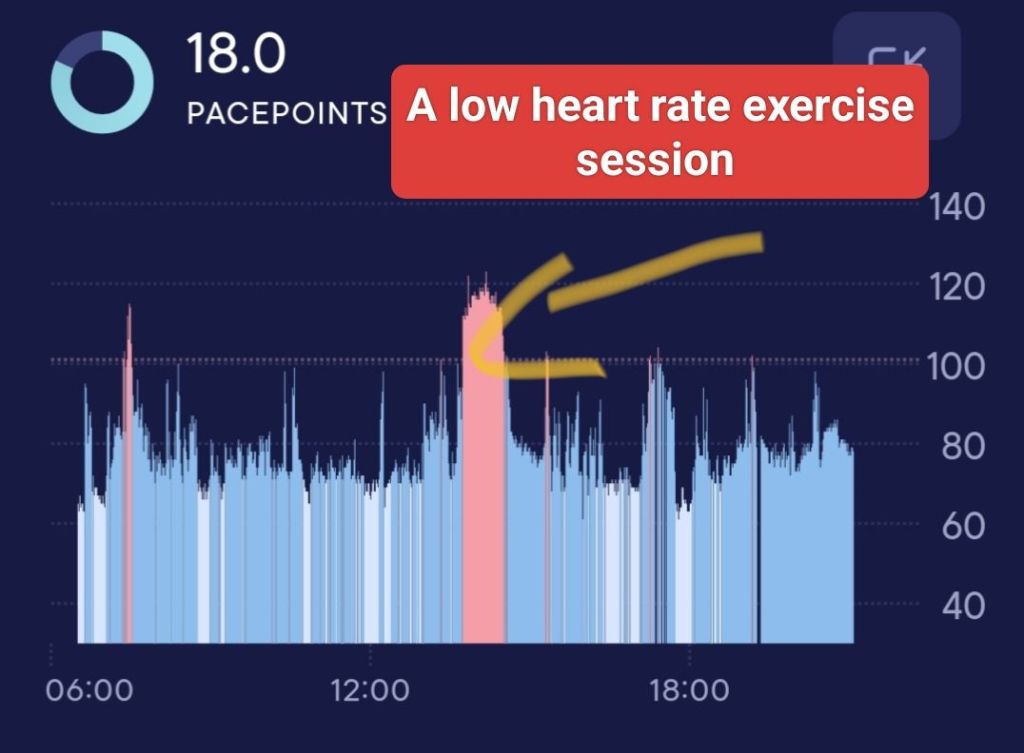
These are two heart rate graphs of a client with uncontrolled POTs one shows a POTs attack while sleeping, the other a day at university. No exercise was done the heart rate spikes were due to sitting up.
If your body is working as hard just to exist as someone’s body would do when undertaking a busy athletic day add in anything on top and it is simply exhausting.
The good news is a combination of strength training and low heart rate cardio can reduce symptoms to the point where the body works close to a normal person. An increase in muscle strength and efficiency helps blood flow work more effectively particularly when pooling. Cardio conditioning increases the stroke volume of the heart. This in turn reduces attacks helps the heart regulate when tachycardic moments hit.
Overall exercise has been found to expand blood volume and plasma volume and increase cardiac muscle mass and heart size. These in turn have been associated huge with improvement in symptoms.
Above is after 6 months of training, you will notice the heart rate is lower here during exercise than it previously was just during sitting. It is also lower and more uniform across the entire day.
More importantly they now are able to live a life close to the one they want. They make plans without worrying about crashes and spend a day busy yet still have a little energy left over.
Although it’s a different (often related) condition hypermobility spectrum disorders can also have a similar impact of daily energy.
Here the lack of functioning connective tissue leads to a general instability within the body. Connective tissue is not limited to the joints but throughout the entire body. When it doesn’t function joints are loose and the entire body lacks structure.
Again this means simply existing is exhausting. However strength training and muscle development can help counter balance the lack of structure.
In both situations the end result is an increased energy capacity and an ability to undertake a normal day/life without utter exhaustion.
You can’t cure underlying health conditions, but with the right help there is a strong chance that you can control them. A regular routine of movement designed to be suitable for your body might allow you to regain your life.
If you would like a female personal trainer, yoga teacher or Pilates instructor in Alnwick Northumberland who is well versed in different types of training including working with health issues please get in touch.















 Sam Kelly Fitness