If you are considering joining me for one to one training in my little home gym in the new year here’s what to expect:-
On the first session we meet and have a chat about what you are looking for, what you hope to gain from the process as well as likes and dislikes movement wise.
Then we go through anything health related that might be relevant to the training sessions. This could be long term health conditions or old injuries.
Taking all of the above into account I take you through a few movements, nothing scary pretty basic body strength and mobility to see what your body wants to add to the conversation. If at any point of course if I ask you to do anything that feels wrong for your body we will skip that movement.
Then all of the above information is used to design a program that works towards your aims while working on mobility and strength to the degree that your body is ready for.
Some people start with a great deal of mobility work in order to allow them to move onto strength work safely. Others start with joint stabilisation for example in hypermobility spectrum disorders this is always stage one. For another it might be quite quickly into strength work.
The mobility and strength is through a blend of yoga, Pilates, bodyweight exercises and free weight resistance training.
Over time as you progress for most people more of the strength work is added in week upon week. Still we keep a focus on mobility to allow for strength through as full a range of movement as possible. This might be over a matter of weeks it might be over a matter of months. Each person will have different needs and their sessions as a result will look and progress differently.
The overall aim is however the same, to help you realign and strengthen your body to allow you to move freely and comfortably in day to day life.
For more information please read through other pages. The reviews page is a good place to start as it gives an idea of the process from a participants point of view and of course feel free to message with any questions.
If you don’t know who Greg is, he created the CrossFit methodology a couple of decades ago.
Not everyone is a fan of CrossFit but it can’t be denied that he took the fitness and turned it on its head. Olympic weightlifting had the biggest resurgence in decades due to CrossFit, hell the barbell became normal in gyms again mainly due to CrossFit. I would also argue that it was the biggest factor in women beginning to see that strength training was for them as well not just men. Now Instagram is full of women of every age getting as strong as they can. This especially in menopause is absolutely and I can’t emphasise this enough critical for health.
Not to forget that he factored in a no nonsense approach to lifestyle and nutrition focused on meat, veg no sugar low carbs at a time everything was still low fat etc.
He was ousted from CrossFit in 2020 for various reasons and hadn’t done a great deal publicly since then.
So I’ll definitely be interested to see where he’s going with this new venture
An interesting change happened within the built environment over the past few decades. Along with major changes in our food environment and movement patterns our light environment completely changed. Perhaps this may be a part of the puzzle in what has caused the increase in chronic illnesses over the past few decades? There will be multiple factors but the current research particularly on red and near infrared light is fascinating and certainly worth following to see where it goes.
What do I mean by our light environment changed? Well gradually we removed full spectrum light from our indoor environment and our lives overall limiting it to predominantly blue light. A combination of factors caused this, firstly our move to life mainly indoors and secondly a desire to make lighting more energy efficient.
Due to the energy saving potential incandescent light bulbs were gradually replaced by LED bulbs which only use the visible spectrum. In other words wavelengths of light that we can actually see. However there are numerous wavelengths of light radiating from the sun, many of which even if we cannot see them interact with the body. Two of the spectrums we lost from our indoor lighting are red and near infrared (NIR)
Previous NIR exposure over the last 200 years [1]
Add to this double glazing and glass that filters out UV light and less time spent outside and we might all be suffering a light deficiency.
This is a reasonably recent issue, in the past we were exposed to full spectrum light from sunlight, firelight, candles, oil lamps and incandescent bulbs. Essentially if a light source produces light and heat it likely will also be producing near infrared and red light also. Near infrared and red light can now also be found in light panels created deliberately to emit these frequencies. In the past decade photobiomodulation has become an expanding area of research with researchers from diverse backgrounds including medics, engineers and NASA scientists all looking at different areas. Discoveries so far include:-
1. **Wound Healing and Tissue Repair**: NIR light has been shown to accelerate wound healing and tissue repair. Research indicates that it can stimulate cellular regeneration and reduce inflammation, which aids in faster recovery.[1]
2. **Pain Reduction**: Studies suggest that NIR light can alleviate pain by reducing inflammation and promoting blood flow to the affected areas. It is particularly effective in treating musculoskeletal pain.[2]
3. **Cognitive Function and Brain Health**: NIR light therapy has been investigated for its potential neuroprotective effects. It can enhance mitochondrial function, reduce oxidative stress, and improve cognitive performance in neurological conditions like dementia.[3]
Tissue specific processes that occur after PBM and benefit a range of brain disorders. BDNF, brain-derived neurotrophic factor; LLLT, low level light therapy; NGF, nerve growth factor; NT-3, neurotrophin 3; PBM, photobiomodulation; SOD, superoxide dismutase. [2]
4. **Skin Health**: NIR light therapy promotes collagen production and improves skin elasticity, which can reduce signs of aging and enhance overall skin health. It is also used to treat conditions like acne and scars. [4]
5. **Improved Circulation**: NIR light can enhance blood flow and oxygenation, which is beneficial for cardiovascular health and recovery from injuries. [5]
6. **Production of melatonin within the cell** NIR light it looks like produces melatonin at a cellular level. This melatonin is believed to be used as coolant by the mitochondria. In turn this reduces inflammation within the cell.[6][7]
7. **Reduction of symptoms in COVID19**
Fascinating work by an intensive care doctor found that used red and NIR light significantly reduced the symptoms of seriously ill patients. [8][9]
8. **Reduction of post prandial blood glucose**
A double blind study found that after meals red light being shone upon the lower back reduced blood sugar levels significantly. This is believed to be due to the cells working more efficiently at up taking the glucose hence there was less left in the blood stream.[10]
Post glucose blood levels red light intervention compared to placebo [3]
9. **May increase collagen production**
Research appears to indicate that controlled exposure to NIR and red light increases collages and reduces wrinkling in the skin.[11] NIR may also prepare the skin for UV light reducing the damaging impact of UV light.[12]
The areas that particularly interest me are the improvement in the function of mitochondria, efficiency with blood glucose, and the impact on the brain.
So what do we do with this information? Itโs not practical to spend 50% of our time outdoors as our ancestors would have done unless you work outdoors and it will likely be a long time before the indoor light environment changes again. Research can take decades to filter through to action.
A first step would be to spend as much time outside as is practical for you and at minimum aim to get out into daylight most days ideally for some form of movement. Full spectrum bulbs are available and a good consideration if you spend most of your time indoors as are (if it’s within your budget) red light devices. However full spectrum bulbs although they release red light they do not have NIR. If there are rooms you spend a large amount of time in, it and NIR devices it might be worth considering switching back to the more efficient incandescent bulbs. In the US there is a bulb manufacturer making bulbs that are a LED plus a NIR filament combination which I would love to see available here. Interestingly because our mitochondria communicate with each other we don’t need more than a small amount of skin exposure to red light to reap some of the benefits.
It’s an interesting and relatively new field within health but maybe in a few years it will be as commonplace as discussions of any other health need. Perhaps we need to think of light as a nutritional need in the same way as water and food? It will be interesting to watch this area!
Due to all of the potential benefits of red and near infrared light I have a light panel installed on the gym wall. The NIR aspect is running throughout training sessions. For any clients who I feel will benefit from red light they have the opportunity to spend 5 minutes with their back to the panel after their session has finished. This is free of charge.
If you would like to have personal training in a private gym in Alnwick Northumberland please get in touch.
Or perhaps you would like to work with an online fitness coach competent in working with health issues and injuries.
[1] Mechanisms of low level light therapy. Hamblin, M. R., & Demidova, T. N. (2006).
[2] Efficacy of low-level laser therapy in the management of neck pain: a systematic review and meta-analysis of randomized placebo or active-treatment controlled trials. Chow, R. T., Johnson, M. I., Lopes-Martins, R. ร. B., & Bjordal, J. M. (2009
[3] Shining light on the head: photobiomodulation for brain disorders. Hamblin, M. R. (2016).
[4] The photobiological basis of low level laser therapy (LLLT). Calderhead, R. G. (2007).
[5] Red/near infrared light stimulates release of an endothelium dependent vasodilator and rescues vascular dysfunction in a diabetes model. Keszler A, Lindemer B, Weihrauch D, Jones D, Hogg N, Lohr NL. (2017)
[6] Melatonin: Both a Messenger of Darkness and a Participant in the Cellular Actions of Non-Visible Solar Radiation of Near Infrared Light. Tan DX, Reiter RJ, Zimmerman S, Hardeland R.
[7] Melatonin and the Optics of the Human Body. Zimmerman S, (2020)
I have as a pale person been a life long sun avoider. I thought that doing so was the right thing. That it was the best path for health. I may well have been wrong!
Most people are aware that during COVID those who in the early days prior to vaccines had a higher level of vitamin d had a higher chance of surviving. This was regardless of age. So much so that vitamin d pills were recommended wide scale. Except pills turned out to do next to nothing. It seems more likely that the higher vitamin d levels were a proxy for sun exposure.
Photo by Sachin C Nair
Maybe we are wrong about being able to get vitamin d (which is actually a hormone) of a type that is bioavailable enough to prevent anything other than severe deficiency from supplements or food. Oral vitamin d certainly doesn’t seem to work to modulate the immune system the way our own vitamin d made from sun exposure does.
What else are we wrong about when it comes to sun exposure.
According to two studies one which originally set out to prove sun exposure in Swedish women increased their risk of death due melanoma and did pretty much the opposite and the other the UK biobank study.
Both show strong and it really seems to be very strong evidence that sun avoidance is linked to a higher risk of all cause mortality. In other words sun avoiders were just more likely to die.
I’m going to add a few excerpts from journal pieces and articles along with the relevant links and then discuss.
“UVR is a skin carcinogen, yet no studies link sun exposure to increased all-cause mortality. Epidemiological studies from the United Kingdom and Sweden link sun exposure with reduced all-cause, cardiovascular, and cancer mortality. Vitamin D synthesis is dependent on UVB exposure. Individuals with higher serum levels of vitamin D are healthier in many ways, yet multiple trials of oral vitamin D supplementation show little benefit. Growing evidence shows that sunlight has health benefits through vitamin Dโindependent pathways, such as photomobilization of nitric oxide from cutaneous stores with reduction in cardiovascular morbidity. Sunlight has important systemic health benefit as well as risks.”
“Living in locations with higher UV levels, for example Cornwall, was associated with a lower risk of death from cardiovascular disease and cancer โ 19 per cent and 12 per cent, respectively โ than living in areas with lower UV levels, such as Edinburgh or Glasgow.
Sunbed use was linked to a 23 per cent lower risk of death from cardiovascular disease and a 14 per cent lower risk of death from cancer, compared to non-users. It is possible that people who use sunbeds may also seek out greater sun exposure and so this result may reflect broader sun seeking behaviour, the team says.
Those with a higher estimated UV exposure had a slightly increased risk of being diagnosed with melanoma โ a type of skin cancer โ but their risk of dying from the condition was not raised.”
“Abstract Background Sunlight exposure and fair skin are major determinants of human vitamin D production, but they are also risk factors for cutaneous malignant melanoma (MM). There is epidemiological evidence that all-cause mortality is related to low vitamin D levels.
Methods We assessed the avoidance of sun exposure as a risk factor for all-cause mortality for 29 518 Swedish women in a prospective 20-year follow-up of the Melanoma in Southern Sweden (MISS) cohort. Women were recruited from 1990 to 1992 and were aged 25 to 64 years at the start of the study. We obtained detailed information at baseline on their sun exposure habits and potential confounders. Multivariable flexible parametric survival analysis was applied to the data.
Results There were 2545 deaths amongst the 29 518 women who responded to the initial questionnaire. We found that all-cause mortality was inversely related to sun exposure habits. The mortality rate amongst avoiders of sun exposure was approximately twofold higher compared with the highest sun exposure group, resulting in excess mortality with a population attributable risk of 3%.
Conclusion The results of this study provide observational evidence that avoiding sun exposure is a risk factor for all-cause mortality. Following sun exposure advice that is very restrictive in countries with low solar intensity might in fact be harmful to women’s health.”
In other words those of us living in north of the equator climates where the UV index drops below the point where vitamin d synthesis is possible for months at a time may be harming our health by avoiding summer sun.
Advice that is sensible in higher UV index climates could actually be dangerous in darker climes. Could the health advice we have been given for decades be very, very wrong.
Note I’m not suggesting extreme sun exposure and certainly baking to the point of burning. But as with everything there is a middle ground and maybe the sun advice in the UK needs to find it
If you would like a female personal trainer, yoga teacher or Pilates instructor in Alnwick Northumberland who is well versed in different types of training including working with health issues please get in touch.
When someone is feeling less than wonderful it’s common to try something and after a while it’s amazing. They start to feel better. Feel better to the point where yoga, Pilates, weight training whatever it happens to be becomes a passion. They want to tell everyone how fricking amazing Pilates is, how they felt awful beforehand, but now they feel pretty good.
Photo by Prasanth Inturi
But then it stops working, but that’s ok they try something new. Maybe going plant based or paleo and that becomes the new magic pathway. Then that stops working and so on.
So what gives? Possibly a few things. Firstly there is a very reductionist and polarising attitude towards life at the moment and it’s prevalent in the health and fitness space particularly. People are in particular camps, they are yogis, or weight lifters or runners. You can see fitness folk arguing in the comment sections of social media about which is better and why. Each of the adherents arguing their case as to why they are right, why weight lifting is better for far loss, or runners have the best VO2 max and that’s more important. How yoga reduces cortisol which does xyz.
Photo by Anna Shvets
Reality is we need a bit of all of them. We need some cardio for heart and lungs, strength training to prevent sarcopenia and frailty in later years and yes mobility too. Because what’s the point of the first two if you can’t get off the floor due to zero mobility?
So that’s a possibility, you had a piece of the movement puzzle but not the whole thing which meant that for example if someone was dealing with POTs they made progress through running but needed strength work also to improve blood flow.
Perhaps someone started a program but haven’t progressed. In other words still doing the same exercises again and again without any progressive overload. Without making them harder. When that happens the body responds to the stimulus but then gets to that stimulus, unless it’s made more challenging in order to again introduce stimulus detraining can even occur.
Or maybe once someone has an exercise routine sorted their body starts to change and needs better nutrition, more sleep. Other pieces of the puzzle.
Photo by Monica Silvestre
If this has happened to you think of the following
What is the quality of your sleep like?
How much daylight do you get each day?
How many steps do you take a day?
How much blue light are you exposed to?
Do you have time away from blue light before sleep?
How much of your diet is real food? Doesn’t matter what your preference is but looks at how much is something that would have existed before processed food.
Do you have time to relax? Are you genuinely de-stressing?
Are you too comfortable all the time? Do you ever deliberately get out of breath, too hot, too cold or hungry?
Weirdly the body responds to adversity the rule of hormesis. In other words the biological phenomenon where a low exposure to a potentially harmful agent, like a toxin or stressor, can have beneficial effects on an organism. At a low dose of course.
Photo by Pao Dayag
Obviously I’m not saying try and do all these things at once, a total life overhaul is unsustainable BUT if you found an exercise routine that is working or a dietary pattern that helps you but you feel you are no longer getting results. Don’t stop what was working and do something entirely different, maybe tweak it. Make the exercise tougher or add in cardio/strength and then look at sleep or steps. Then after a few months add something else.
The reality is for optimal health we eventually need to look at all of it. Rather than expecting a magic bullet we need to accept that the human animal needs to eat well, move regularly, get daylight and sleep effectively. Any single piece of the puzzle missing can leave you feeling less than awesome.
If you would like to have a personal trainer with a holistic approach working out of a private home gym in Alnwick Northumberland get in touch!
This is particularly for those of you who are struggling with energy limiting disorders that generally are helped by exercise.
An example would be uncontrolled Postural Orthostatic Tachycardia Syndrome. With POTs the uncontrolled heart rate spikes and dysautonomia means that a person’s body is working twice as hard just to exist.
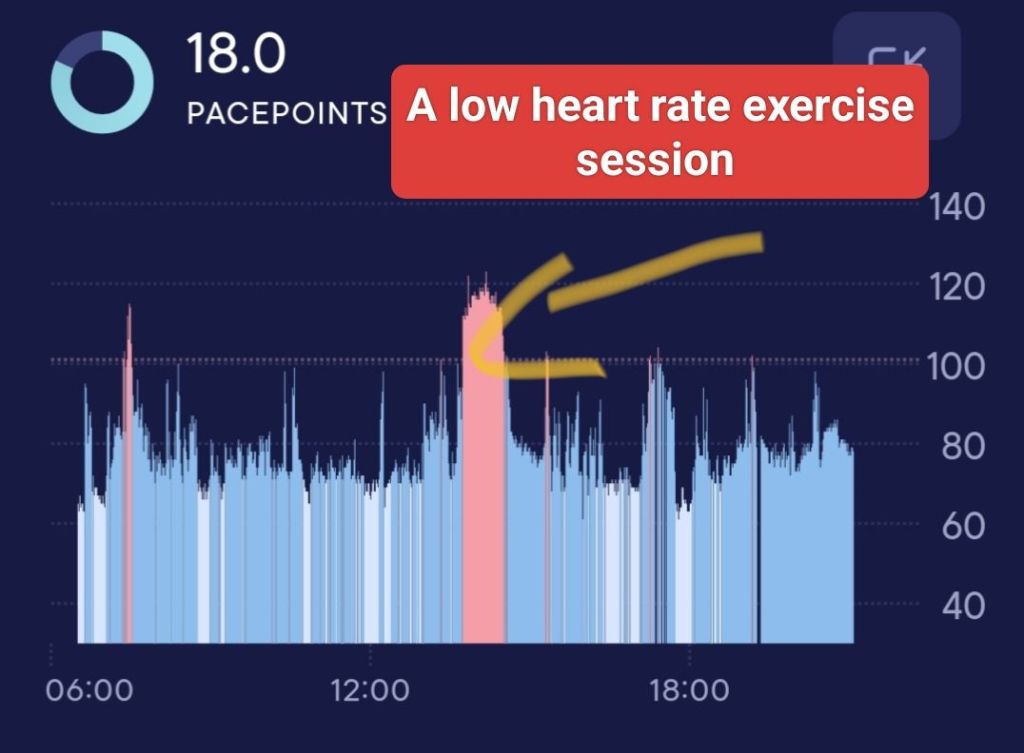
These are two heart rate graphs of a client with uncontrolled POTs one shows a POTs attack while sleeping, the other a day at university. No exercise was done the heart rate spikes were due to sitting up.
If your body is working as hard just to exist as someone’s body would do when undertaking a busy athletic day add in anything on top and it is simply exhausting.
The good news is a combination of strength training and low heart rate cardio can reduce symptoms to the point where the body works close to a normal person. An increase in muscle strength and efficiency helps blood flow work more effectively particularly when pooling. Cardio conditioning increases the stroke volume of the heart. This in turn reduces attacks helps the heart regulate when tachycardic moments hit.
Overall exercise has been found to expand blood volume and plasma volume and increase cardiac muscle mass and heart size. These in turn have been associated huge with improvement in symptoms.
Above is after 6 months of training, you will notice the heart rate is lower here during exercise than it previously was just during sitting. It is also lower and more uniform across the entire day.
More importantly they now are able to live a life close to the one they want. They make plans without worrying about crashes and spend a day busy yet still have a little energy left over.
Although it’s a different (often related) condition hypermobility spectrum disorders can also have a similar impact of daily energy.
Here the lack of functioning connective tissue leads to a general instability within the body. Connective tissue is not limited to the joints but throughout the entire body. When it doesn’t function joints are loose and the entire body lacks structure.
Again this means simply existing is exhausting. However strength training and muscle development can help counter balance the lack of structure.
In both situations the end result is an increased energy capacity and an ability to undertake a normal day/life without utter exhaustion.
You can’t cure underlying health conditions, but with the right help there is a strong chance that you can control them. A regular routine of movement designed to be suitable for your body might allow you to regain your life.
If you would like a female personal trainer, yoga teacher or Pilates instructor in Alnwick Northumberland who is well versed in different types of training including working with health issues please get in touch.
Well it’s been a while since I updated here and wow what a 6 months it’s been!
There have been plenty of awesome things for example my eldest married his beautiful fiancรฉe
We have had days out a plenty. One of which was comic con
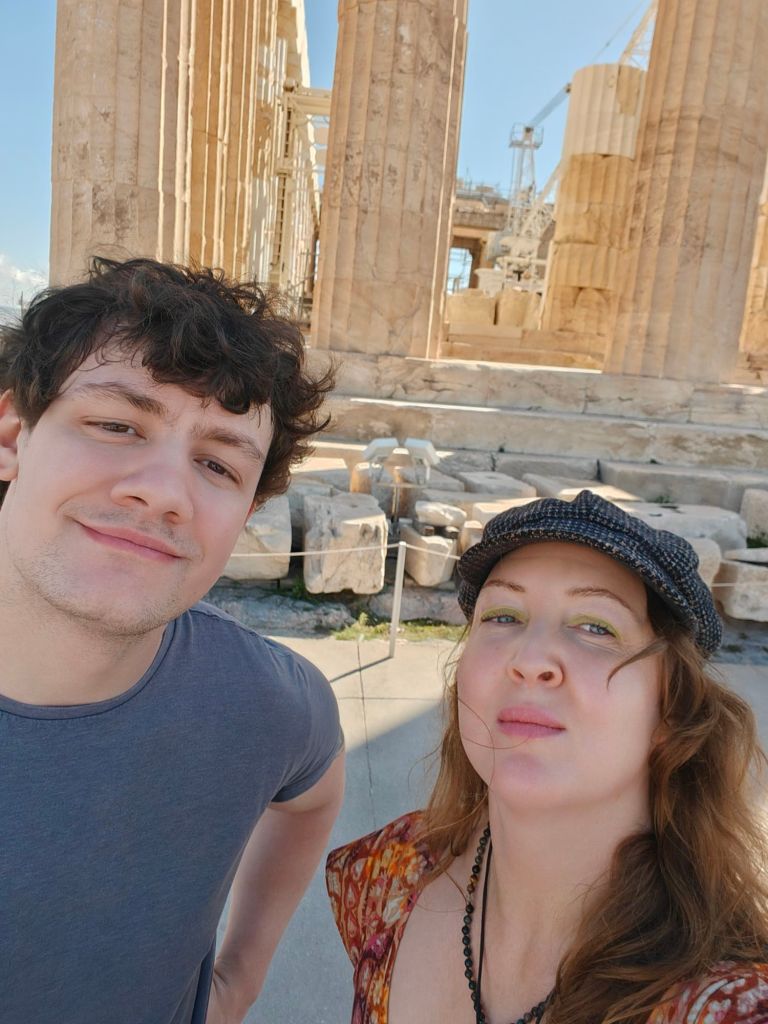
So much fun! A trip to Athens with my eldest which was lovely to spend some time with him before he officially became a married man!
There have also of course been downs. I had a pancreatic cancer scare. Thankfully all ok! My daughter had a precancerous breast tumor removed. Her tumours are always terrifying as she has PTEN harmatoma syndrome which means she grows tumours both benign and cancerous. She lost her thyroid to cancer at 10 years old. Thankfully after surgery she is ok although her chronic fatigue was quite bad afterwards.
All of the various ups and downs led me to overdo and after 6 months of 14 hour days I was exhausted, had a never ending sinus infection and then a chronic fatigue crash.
I am picking up now and later in the week will write about my experiences with having a crash after symptoms were under control for years and what it taught me.
That’s about all for now!
If you would like a female personal trainer, yoga teacher or Pilates instructor in Alnwick Northumberland who is well versed in different types of training including working with health issues please get in touch.
Yes I said revolution because resolutions always seem to be about giving up something. I revolt against that and am commenting to learning something.
In particular it’s olympic lifting. Which will be the main focus of my training for the next year. I will still use dumbbells for joint stability as I’m a bendy stretchy person but more as an accessory and a lil wod here and there to stop my heart exploding.
I have an amazing coach who I will see once a month and he can tell me where I’m going wrong and then I follow the program in between.
Today was day 3 of my year of olympic lifting, at this stage we are keeping it pretty light while I think about technique.
Today I particularly was aware in snatch balance of my tendency to land more on toes than heels which I’m working on. Snatch pull I find particularly useful as I really get the feeling of it being close to my belly.
I closed up the session with some split squats and heavy step ups then a short street parking work out. All in all body was thoroughly tickled
Interestingly my heart rate had a decent boomf from the olympic lifting
I am sharing this here as I feel it is important to talk about these things and honestly the sudden change in my HRT and drop to low levels has been pretty catastrophic for me as it often can for for people in surgical menopause. Hopefully I can get hold of my specilaist and get back to my normal self over Xmas. I will be dropping the letter into my doctor surgery later today.
Dear XXX Doctors,
I am a patient at XXX and wanted to raise an issue I ran into recently regarding ERT. I am a 50 year old woman and have been in surgical menopause since 2019. I did not initially fare terribly well on ERT and as a result sought the advice of a recognised menopause specialist registered with the BMS who as well as working privately runs NHS clinics. I initially consulted with her on the continuation of night sweats in October of 2021. She suspected I was not absorbing the transdermal oestradiol terribly well and recommended I increase estradot patches to 150 mcg. After this my night sweats, lethargy and hot flushes resolved.
Since that point aside from the odd infection I have remained generally in good health, my blood pressure is fine, cholesterol and all other blood markers appear to be within healthy parameters. I continued running my business and working on part time law PhD. All was in general fine.
On October the 23rd of this year Dr GP contacted me out of the blue. He felt I was on too high an ERT dose and wanted to drop my dosage. Which he did switching me from the 150 mcg patches to 4 pumps of estrogel. He believed that I would actually feel fine on that dosage and should I not after 6 weeks or so he would arrange blood tests to see if was absorbing the gel. At the recommendation of Dr Specialist when I began to have serious issues sleeping I increased to 5 pumps a day. Over the past 2 months since the change in my ERT I have had quite serious night time hot flushes that result in disturbed sleep, extremely low energy, I have struggled to concentrate and had to take time out of my PhD and felt so tired and actually at times very unwell I had to take time of work. I went from exercising 6 days a week and walking around 13000 to 15000 steps a day to struggling to exercise 3 to 4 times a week and walking 8000 steps a day. I also gained a few pounds in the process. However, I persevered believing that the doctor had my best interests at heart.
My oestradiol level was checked on the 13th of December and came back at 197 pmol/l (a low level) I also appear to have a higher than normal SHBG which may further be inhibiting absorption. Overall it is clear that I am not absorbing the transdermal gel terribly well. This is the case for some individuals. Dr Louise Newson has previously covered the reasons for this which may include the difference in skin thickness or distribution of capillaries[1]. It is important to note that the amount of medication applied is not the same as the amount of medication absorbed and some individuals are quite simply poor absorbers[2]. When my blood test results returned at the low end of normal and as I was suffering the return of symptoms my assumption was that it would be acknowledged that I was a poor absorber and would be returned to a dosage that allowed me to be free of symptoms and lead a decent quality of life. To my surprise Dr GP stated that he could not support a prescription for above the standard highest dose even with the evidence he requested provided. He suggested that I unofficially use more than the official prescription, but this leaves me with a situation where I may run out early. I also do not understand the logic.
I questioned why this was his recommendation and he stated that there was no evidence as to the safety associated with higher doses, however if I am not absorbing the majority of the gel I fail to understand how I am receiving a higher dose. Dr GP also stated that it was due to NICE guidelines. I could not find a statement in the NICE menopause section prohibiting higher doses in order to control symptoms, in fact the general guidance appears to be to adjust dosage according to response the guidelines also state โAdopt an individualised approach at all stages of diagnosis, investigation and management of perimenopause and menopauseโ[3] he also cited the main concern as being the risk of breast cancer however the NICE guidelines state โHRT with oestrogen alone is associated with little or no change in the risk of breast cancerโ[4] The American Cancer Association states โestrogen-only HRT is not linked to a higher risk of breast cancer. The Womenโs Health Initiative studies also found no increase in breast cancer risk in women using systemic oestrogen-only HRT.โ[5] Even in women with the BRCA1 mutation who have undergone hysterectomies oestrogen only replacement does not appear to have any increased risk of breast cancer[6].
The other risks associated with ERT such as blood clots are commonly accepted to not be a risk with transdermal methods. I am not sure what risks I am avoiding then by having my oestradiol levels kept at a level that is no longer controlling menopausal symptoms. In fact there is research that indicates in the 50 to 60 age group women who have had hysterectomies and oophorectomies who avoid ERT are at an overall higher risk of all cause mortality[7]
When I raised the potential benefits of ERT to bone density which needs according to research to have blood levels of above 250 pmol/l in order to be effective I was informed that ERT was not given for that nor was it seen as relevant, the control of symptoms was the only reason for prescribing. An interesting statement when a patient raises it as a concern in particular when it is considered that falls are most common cause of injury related deaths in over 75 year olds and injury in over 65 year old. The issue being breaks which of course is far more likely with low bone density[8].
All in all I have been placed in a situation where I went from feeling well and active to not sleeping, gaining weight, feeling very unwell and unable to work plus not wanting to exercise. I was then told that fundamentally this was for my benefit. The appointment itself was classified as โwomenโs healthโ. I would be very interested to have it explained to me how gaining weight, losing work, not being able to pursue my PhD, not sleeping and becoming more inactive is going to benefit my health long term when all research would indicate otherwise. I suspect that the answer would be that I must just carry on as normal regardless of how awful I feel, women have historically often been told we must just put up with a lower quality of life and expect less, I did hope that in 2023 we were moving beyond that.
Then there is the matter of how this was undertaken which I feel was somewhat disingenuous, had at the outset the doctor explained that regardless of the outcome of drop in dosage, regardless of any return of symptoms and regardless of any blood results confirming poor absorption he would simply not prescribe above the standard dosages it would have been rather more honest. At which point I would have sought advice from the menopause specialist, not reduced or changed my ERT and asked to undertake blood tests to ascertain my levels at that point. I suspect in doing so I would have avoided a few rather unpleasant months. I presume that the real reason has little to do with my health or wellbeing which has done nothing but deteriorate since Dr GP decided to call me in October and more to do with cost reduction.
I am going to see the menopause specialist with my blood results as soon as I can, which may be tricky over Christmas. I am lucky that I can afford to do so but many other women would not be able to do so and they deserve a quality of life. Being over 50 or in menopause surgical or otherwise does not mean our day to day ability to function in the world should be viewed as so utterly meaningless and insignificant. We still have a great deal to contribute and for those who menopause symptoms are significant HRT or ERT may be a part of being able to do so. However that means ERT/HRT at a level that actually controls symptoms. It may well be necessary to check that levels are within normal ranges via blood tests, if the blood tests come back at the lower end of the range and symptoms are present the logical approach would be to adjust the dosage not tell the patient that they should be fine regardless of whether they are. Women deserve better.