Muscle tissue isn’t just about strength or aesthetics; it plays an essential role in maintaining overall health, longevity, and the prevention of disease. Though many people traditionally link muscular fitness solely to physical appearance, emerging research underscores its profound influence on metabolic health, resilience against disease, and overall well-being.
First and foremost, muscle tissue is a metabolic powerhouse. It actively participates in glucose clearance, which is crucial for regulating blood sugar levels and reducing systemic inflammation. In fact, the more muscle mass you have, the better your body’s ability to metabolize glucose, potentially lowering the risk of developing Type 2 diabetes (1). Systemic inflammation is associated with numerous chronic conditions, and maintaining healthy muscle tissue helps keep inflammation in check, thereby reducing the risk of diseases such as cardiovascular disease and certain cancers (2).
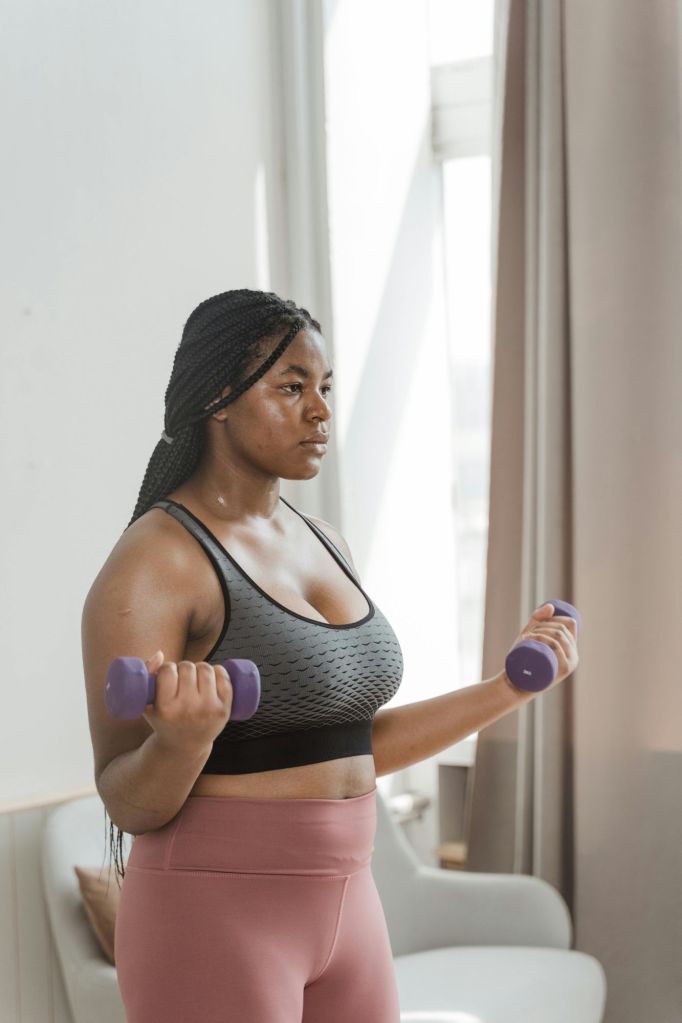
Photo by RDNE Stock project: Pexels
To maintain this essential tissue, engaging in regular resistance training is vital. Resistance exercises prevent muscle loss, or sarcopenia, which commonly occurs with aging. Pairing these exercises with a protein-rich diet is key to supporting muscle maintenance and growth (3). Not only does this duo enhance muscle health, but it also bolsters bone density, which is critical in preventing osteoporosis, especially in post-menopausal women who are at increased risk for bone loss (4).
Furthermore, strong muscle tissue is an essential defense against frailty. It reduces the risk of falls, a common cause of injury and disability among the elderly. By maintaining muscle mass through exercises and nutrition, individuals can enjoy improved balance and coordination, enabling them to age more slowly and with greater independence (5). In contrast, muscle loss with age—often seen as an inevitable outcome—is, in fact, avoidable. Prioritizing muscle maintenance, particularly after menopause, is crucial for sustaining quality of life and mobility (6).
Photo by RDNE Stock project: Pexels
Low muscle tone, unfortunately, brings a host of risks. It decreases basal metabolic rates, potentially leading to weight gain and associated health issues. Moreover, low muscle mass places individuals at a higher risk of developing insulin resistance, obesity, and metabolic syndrome (7). Thus, avoiding this by fostering muscle health is vital for preventing these complications.
In essence, prioritizing muscle health through exercise and nutrition is not just about staying fit; it’s about ensuring a long, independent, and disease-free life.
If you would like to have personal training, yoga or Pilates in a private gym in Alnwick please get in touch.
**References**
1. Williams, R. et al. (2015). “The Metabolic Role of Muscle.” *Journal of Glucose Management*.
2. Smith, J. (2017). “Inflammation and Chronic Diseases.” *Global Health Review*.
3. Thomas, L. et al. (2018). “Protein and Muscle Maintenance.” *Nutrition Today*.
4. Jones, M. (2020). “Bone Density Post-Menopause.” *Women’s Health Reports*.
5. Wilson, A. (2019). “Falls and Frailty.” *Aging and Mobility Studies*.
6. Clark, S. et al. (2021). “Preventing Age-related Muscle Loss.” *Geriatric Sciences*.
7. Brown, T. (2022). “Low Muscle Tone and Metabolic Health.” *Endocrine Insights*.
Perhaps like a lot of people in the new year you are thinking about dusting off your trainers and getting back into exercise? The question is how do you set yourself up for success? Whether you’re returning after a long break or just revamping your routine, it’s crucial to approach it thoughtfully and safely.
First things first—be gentle with yourself as you restart your fitness journey. Begin with light workouts or physical activities that you genuinely enjoy, like cycling, dancing in the kitchen swimming, or even brisk walks. The key is to ease your body back into the rhythm of regular exercise without overwhelming it. If you are wanting to learn a new skill such as yoga, Pilates or start resistance training with free weights I would strongly recommend classes or a trainer. That way you learn the correct form and exercises can be adapted to your needs. This is especially important if you have old or existing injuries or underlying health conditions. Nothing ruins a good intention like an injury.
Photo by Kampus Production: Pexels
As you get comfortable, you’ll want to introduce a concept known as progressive overload. This means gradually increasing the weight, intensity, or duration of your workouts to continue challenging your muscles and seeing improvements. It’s a crucial strategy to keep progressing, but always listen to your body and adjust accordingly. If you don’t incorporate progressive overload at best you stop progressing but at worst you can even regress. The body is incredibly good at adapting which means if you don’t continue to challenge it, your body will adapt to the stimulation so we’ll the starting program will no longer do much. If you are working with a trainer or coach they will handle this aspect for you.
Photo by Marcus Chan: Pexels
After a while you might lose the motivation to continue, you will I’m sure have very personal reasons as to why you started it’s worth remembering this initial motivation. Here are a few potential reasons to move that hopefully will keep you motivated.
1. **Bone Health**: Regular exercise, particularly weight-bearing activities like walking and weightlifting, is essential for maintaining bone density. This helps prevent conditions like osteoporosis, keeping your bones strong as you age (Hamdy, 2021).
2. **Preventing Sarcopenia**: As we age, muscle mass naturally declines, a process known as sarcopenia. Staying active and engaging in resistance training can slow down this process, helping maintain muscle strength and size (Janssen, 2018).
3. **Independence and Enjoyment**: Fitness isn’t just about looking good—it’s about feeling good and being able to live life on your terms. Regular movement helps maintain independence, making daily tasks easier and more enjoyable. Whether it’s playing with your kids, gardening, or dancing, staying active enhances your quality of life.
Finally how do you set yourself up for the best chance of success?
– **Set Realistic Goals**: Start with achievable targets and slowly increase them as you build strength and endurance.
– **Find a Buddy**: Sometimes, having a workout partner can provide extra motivation and make activities more enjoyable.
Photo by Elina Fairytale: Pexels
– **Hire a Trainer**: Perhaps you already know you struggle with what to do and when or sticking to a program. Having an appointment keeps you accountable and takes care of “where do I start and what do I do”. It is also really important to seek the advise of someone who knows what they are doing if you are recovering from illness or injury. Part of which might be getting clearance from your doctor then seeking a trainer who can work with/around that condition.
– **Celebrate Small Wins**: Every step forward is progress. Celebrate milestones, no matter how small.
– **Remember why you started**: Keep in mind your personal reasons for starting as well as those listed above. Exercise is a lot like brushing our teeth, we don’t always want to do it, but we know it’s critical to good health.
Remember, the goal is to enjoy the journey as much as the results. Stay patient, be consistent, and your efforts will surely pay off.
If you would like to have personal training, yoga or Pilates in a private gym in Alnwick please get in touch.
– Janssen, I. (2018). The Challenge of Sarcopenia: Musculoskeletal Declines with Aging. *Public Health Reviews*, [online] Available at: <https://www.publichealthreviews.com>
If you would like to work with a personal trainer also qualified in yoga and Pilates in a private home gym in Alnwick please get in touch.
When someone is feeling less than wonderful it’s common to try something and after a while it’s amazing. They start to feel better. Feel better to the point where yoga, Pilates, weight training whatever it happens to be becomes a passion. They want to tell everyone how fricking amazing Pilates is, how they felt awful beforehand, but now they feel pretty good.
Photo by Prasanth Inturi
But then it stops working, but that’s ok they try something new. Maybe going plant based or paleo and that becomes the new magic pathway. Then that stops working and so on.
So what gives? Possibly a few things. Firstly there is a very reductionist and polarising attitude towards life at the moment and it’s prevalent in the health and fitness space particularly. People are in particular camps, they are yogis, or weight lifters or runners. You can see fitness folk arguing in the comment sections of social media about which is better and why. Each of the adherents arguing their case as to why they are right, why weight lifting is better for far loss, or runners have the best VO2 max and that’s more important. How yoga reduces cortisol which does xyz.
Photo by Anna Shvets
Reality is we need a bit of all of them. We need some cardio for heart and lungs, strength training to prevent sarcopenia and frailty in later years and yes mobility too. Because what’s the point of the first two if you can’t get off the floor due to zero mobility?
So that’s a possibility, you had a piece of the movement puzzle but not the whole thing which meant that for example if someone was dealing with POTs they made progress through running but needed strength work also to improve blood flow.
Perhaps someone started a program but haven’t progressed. In other words still doing the same exercises again and again without any progressive overload. Without making them harder. When that happens the body responds to the stimulus but then gets to that stimulus, unless it’s made more challenging in order to again introduce stimulus detraining can even occur.
Or maybe once someone has an exercise routine sorted their body starts to change and needs better nutrition, more sleep. Other pieces of the puzzle.
Photo by Monica Silvestre
If this has happened to you think of the following
What is the quality of your sleep like?
How much daylight do you get each day?
How many steps do you take a day?
How much blue light are you exposed to?
Do you have time away from blue light before sleep?
How much of your diet is real food? Doesn’t matter what your preference is but looks at how much is something that would have existed before processed food.
Do you have time to relax? Are you genuinely de-stressing?
Are you too comfortable all the time? Do you ever deliberately get out of breath, too hot, too cold or hungry?
Weirdly the body responds to adversity the rule of hormesis. In other words the biological phenomenon where a low exposure to a potentially harmful agent, like a toxin or stressor, can have beneficial effects on an organism. At a low dose of course.
Photo by Pao Dayag
Obviously I’m not saying try and do all these things at once, a total life overhaul is unsustainable BUT if you found an exercise routine that is working or a dietary pattern that helps you but you feel you are no longer getting results. Don’t stop what was working and do something entirely different, maybe tweak it. Make the exercise tougher or add in cardio/strength and then look at sleep or steps. Then after a few months add something else.
The reality is for optimal health we eventually need to look at all of it. Rather than expecting a magic bullet we need to accept that the human animal needs to eat well, move regularly, get daylight and sleep effectively. Any single piece of the puzzle missing can leave you feeling less than awesome.
If you would like to have a personal trainer with a holistic approach working out of a private home gym in Alnwick Northumberland get in touch!
The past couple of months I’ve been working on setting boundaries. I am really not very good at doing this and basically want everyone I care about to be happy. I think it’s not uncommon for mums to find themselves in this situation, especially if they have children with additional needs. My 3 children all had significant challenges growing up ranging from depression, autism (and the unwillingness of the world to be a kind place to autistic people) to cancer and an especially nasty cancer causing genetic disorder.
I always saw it as my role to smooth things over, to make their life easier when at times it was far from it. Which of course is the right thing to do, but then I kept doing it not only for them but for well anyone I loved. I continually put myself last and well I found myself exhausted. Bone tired exhausted, regularly doing things for other people that actually they could do for themselves. I was the person who would say yes to everyone and bend over backwards to make everyone’s life easier.
You will think this is ridiculous, but it wasn’t till I started working with a counsellor dealing with some of the issues I have from childhood trauma and some of the awful years where my children were suffering that I realised this was a problem. Somewhere in my psyche I have a belief that in order to be loved I need to look after everyone. That unless I am making sure they are happy they won’t love me. Perhaps it stems from being years of being bullied, perhaps later years and bad relationships. I honestly don’t know. But it’s there as a belief and it’s one that I’m working with.
I started with family boundaries, allowing people to do things for themselves that they were more than capable of. There are people in my life who have significant struggles not all of which they can manage on their own I still help with areas they need. But I was taking on a lot that they are more than capable of and that was primarily my fault. I hadn’t set the boundaries for myself and felt my input was vital. The reasons of childhood cancer etc are more than understandable. But still that’s where I found myself, taking over when people didn’t actually need it.
But finding myself waking up at 5 am and not stopping till 8 pm was becoming unsustainable and I was just making myself miserable.
At 50 I am in a process of re-finding myself and allowing myself to come first sometimes. I was not just put on this earth to look after everyone else and nothing more than that. I deserve to explore my own joy and ambitions. I deserve to have time to read a book, relax in a bath or see friends. Other people deserve the chance to try and sometimes fail on their own and by doing so grow in the way we all have to.
That is a work in progress, saying no sometimes, and backing off when it’s not really my place to take responsibility.
The next set of boundaries I have started to set are with work. I am a self employed personal trainer which means everything is my responsibility from advertising to looking after equipment, keeping records on clients, planning and of course delivering the session. Not to mention the actual delivery of the session. For every hour taught there is another 20 to 30 minutes spent on setting the room up, then tidying it up, note making and planning.
After a month of a great deal of cancellations and numerous evenings on the phone re-arranging appointments I was talking to my counsellor who suggested that was another boundary I should set. He was of course right. I needed work boundaries. Just as I could not be there for family 24/7 I needed to have some stability in my working life. I previously had taught classes which is a very different way of working and not reliant on an individual in the same way. The transition into working out of a home gym means I am learning as I go along and I had not at the outset stated clear guidelines.
All of my clients are genuinely lovely people and likely hadn’t even thought about the issues it causes when there are a lot of cancellations especially last minute.
Before becoming self employed I did not realise the frustration of turning work away because I believed I was fully booked to have so many cancellations you lose a full day of work. I am a great deal more considerate now of my fellow self employed friends.
There’s the added complication that unlike a hairdresser or a beauty therapist for example I can’t fit in a new client ad hoc. To be able to see everyone in a given week I can only have a finite number of clients. Occasional clients isn’t really a thing in this line of work.
Any new client I take on is going to want regular sessions be it weekly or fortnightly.
I also want my little business to be as successful as possible and to be able to help as many people as possible in a given week.
My new rules then for work were
1. Not replying to messages after 6.30 pm
2. Instituting cancellation terms. Fairly standard ones nothing exciting.
3. If anyone really is unreliable let them go as a client.
I emailed everyone with my new terms and I immediately lost a couple of clients. Strangely they were clients who already did everything I had outlined in the cancellation terms, which really took me aback.
With both setting boundaries with family and with work there was a similar reaction, some people totally understood it. Others took it personally when it wasn’t.
As someone who struggles with setting boundaries any negative reaction is very tough, which is very much a me thing. It felt especially with loved ones like it reinforced my fear that to be loved I need to be forever available.
With family and friends I chose to focus on the people who loved me anyway, who offered to help me because they knew I was flat out busy. Who loved me regardless for who I am not what I do, even when I am too tired to have anything to give.
With clients it is a little more simple, they come and go it’s the nature of the business and I will always respect the choice of anyone who has decided it is no longer for them. Even if I will miss them.
When setting boundaries we do not control how the other person will react. That is an aspect of the process we need to accept.
Their reaction is their own and they absolutely have a right to it, that doesn’t mean it was wrong to set the boundary, although you may question yourself.
Each of us has a finite amount of energy and time to give to family, friends and work. Accepting that and working with it long term is to the benefit of everyone. None of us is a great deal of use if we are totally burned out and overwhelmed.
Now I have boundaries in place, as much in my mind as anywhere else I feel genuinely lighter and more optimistic for the future. I feel less like I am running to stand still and more like I can start to plan things to look forward to. It is never an easy thing to do, but if your lines are so blurred you don’t ever have time to yourself, time to relax or be open to plans and feel as though you exist for everyone else you may need to do the same.
Remember
You are entitled to boundaries both in your private and work life. You are not here to look after everyone else at the expense of your own health.
Not everyone will like it.
You don’t control how anyone else reacts or views your decision.
You may lose some people from your personal or professional life and not understand why.
It is still worth setting the boundaries, once through the process of doing so your life will improve as a result. Likely your relationships will benefit due to this.
If you would like a female personal trainer in Alnwick Northumberland who is well versed in different types of training including working with health issues please get in touch.
I am also a qualified yoga teacher and Pilates instructor.
Some people excel at sport and athleticism from an early age, it is woven into their DNA. They take to any physical activity they try with ease and grace. The kind of people who won every race at sports day and captained every team. Then there’s those like me who were quite literally picked last for every team in PE, I swear to god if my classmates could have chosen the school bench over me they would. To be fair it would have probably done a better job at the time.
I was skinny, knock kneed, had an undiagnosed hypermobility spectrum disorder and the serious lack of muscle tone that goes with it. As is often the case when we are awful at something I avoided it like the plague, I don’t know if things have changed but in my day PE teachers had no interest in those without natural athleticism never mind the reasons why.
To be entirely honest my experiences at school with regard to fitness were not just negative they were actually traumatic. I was openly bullied for my lack of physicality and knock knees and viciously name called. I’m not sure though out of the laughter or the pity clap I would sometimes get coming in dead last for something…again which one was worse. I still won’t even so much as take part in a 5k race in public as a result, the idea of any type of competition fills me with horror to the point where I actually feel physically sick.
Why am I telling you this? It’s not for pity or sympathy, I am honestly quite fine. The past is the past. I want you to read this if you like me had no natural ability and let you know that it does not and never did exclude you from looking after yourself physically. No matter how rubbish you were at PE you can still benefit from various forms of movement. Heck you might even enjoy it. I certainly do, in fact I can’t imagine a life where I don’t get up and exercise pretty much every day. I am so grateful that I discovered first yoga and Pilates in my 20s which I found I actually quite naturally built for and being the antithesis of competitive sports allowed me to tune in with my body and learn to love moving it. It was this love of movement I took into CrossFit and strength training, the difference being in that situation I was pretty rubbish to begin with. However many years later of keeping at it I am actually
pretty strong and certainly fit.
That for me is the important aspect, being fit and healthy, being strong enough to squat down to the ground with a heavy back pack and stand back up, being able to walk briskly up hills without losing my breath, being limber enough to fold into my legs with no discomfort, being able to lift heavy suitcases over head for other passengers on trains. These are the things that matter to me. That and the sheer love of movement, oh heavens it is simply glorious to just move, there is a delight in using your body that is with language almost inexpressible. As though different movements all have their own flavor and to engage in more than one is like a banquet for the body. Plus as a result I honestly feel better at nearly 50 than I did my entire adult life.
Don’t let a perceived idea of not being athletic dictate to you that exercise isn’t for you, it is for everyone from those like my husband who are naturally talented in a particular field (running) and thrive in competition to those like myself who myself who had to work at it. In fact I think those of us who are not naturals potentially benefit even more as there are often underlying conditions that make us that way which are improved by movement.
Exercise is for all of us and is certainly one of the keys to health and longevity.
If you would like to work with a personal trainer in a quiet setting in Alnwick Northumberland get in touch!













 Sam Kelly Fitness