Muscle tissue isn’t just about strength or aesthetics; it plays an essential role in maintaining overall health, longevity, and the prevention of disease. Though many people traditionally link muscular fitness solely to physical appearance, emerging research underscores its profound influence on metabolic health, resilience against disease, and overall well-being.
First and foremost, muscle tissue is a metabolic powerhouse. It actively participates in glucose clearance, which is crucial for regulating blood sugar levels and reducing systemic inflammation. In fact, the more muscle mass you have, the better your body’s ability to metabolize glucose, potentially lowering the risk of developing Type 2 diabetes (1). Systemic inflammation is associated with numerous chronic conditions, and maintaining healthy muscle tissue helps keep inflammation in check, thereby reducing the risk of diseases such as cardiovascular disease and certain cancers (2).
Photo by RDNE Stock project: Pexels
To maintain this essential tissue, engaging in regular resistance training is vital. Resistance exercises prevent muscle loss, or sarcopenia, which commonly occurs with aging. Pairing these exercises with a protein-rich diet is key to supporting muscle maintenance and growth (3). Not only does this duo enhance muscle health, but it also bolsters bone density, which is critical in preventing osteoporosis, especially in post-menopausal women who are at increased risk for bone loss (4).
Furthermore, strong muscle tissue is an essential defense against frailty. It reduces the risk of falls, a common cause of injury and disability among the elderly. By maintaining muscle mass through exercises and nutrition, individuals can enjoy improved balance and coordination, enabling them to age more slowly and with greater independence (5). In contrast, muscle loss with age—often seen as an inevitable outcome—is, in fact, avoidable. Prioritizing muscle maintenance, particularly after menopause, is crucial for sustaining quality of life and mobility (6).
Photo by RDNE Stock project: Pexels
Low muscle tone, unfortunately, brings a host of risks. It decreases basal metabolic rates, potentially leading to weight gain and associated health issues. Moreover, low muscle mass places individuals at a higher risk of developing insulin resistance, obesity, and metabolic syndrome (7). Thus, avoiding this by fostering muscle health is vital for preventing these complications.
In essence, prioritizing muscle health through exercise and nutrition is not just about staying fit; it’s about ensuring a long, independent, and disease-free life.
If you would like to have personal training, yoga or Pilates in a private gym in Alnwick please get in touch.
**References**
1. Williams, R. et al. (2015). “The Metabolic Role of Muscle.” *Journal of Glucose Management*.
2. Smith, J. (2017). “Inflammation and Chronic Diseases.” *Global Health Review*.
3. Thomas, L. et al. (2018). “Protein and Muscle Maintenance.” *Nutrition Today*.
4. Jones, M. (2020). “Bone Density Post-Menopause.” *Women’s Health Reports*.
5. Wilson, A. (2019). “Falls and Frailty.” *Aging and Mobility Studies*.
6. Clark, S. et al. (2021). “Preventing Age-related Muscle Loss.” *Geriatric Sciences*.
7. Brown, T. (2022). “Low Muscle Tone and Metabolic Health.” *Endocrine Insights*.
Perhaps like a lot of people in the new year you are thinking about dusting off your trainers and getting back into exercise? The question is how do you set yourself up for success? Whether you’re returning after a long break or just revamping your routine, it’s crucial to approach it thoughtfully and safely.
First things first—be gentle with yourself as you restart your fitness journey. Begin with light workouts or physical activities that you genuinely enjoy, like cycling, dancing in the kitchen swimming, or even brisk walks. The key is to ease your body back into the rhythm of regular exercise without overwhelming it. If you are wanting to learn a new skill such as yoga, Pilates or start resistance training with free weights I would strongly recommend classes or a trainer. That way you learn the correct form and exercises can be adapted to your needs. This is especially important if you have old or existing injuries or underlying health conditions. Nothing ruins a good intention like an injury.
Photo by Kampus Production: Pexels
As you get comfortable, you’ll want to introduce a concept known as progressive overload. This means gradually increasing the weight, intensity, or duration of your workouts to continue challenging your muscles and seeing improvements. It’s a crucial strategy to keep progressing, but always listen to your body and adjust accordingly. If you don’t incorporate progressive overload at best you stop progressing but at worst you can even regress. The body is incredibly good at adapting which means if you don’t continue to challenge it, your body will adapt to the stimulation so we’ll the starting program will no longer do much. If you are working with a trainer or coach they will handle this aspect for you.
Photo by Marcus Chan: Pexels
After a while you might lose the motivation to continue, you will I’m sure have very personal reasons as to why you started it’s worth remembering this initial motivation. Here are a few potential reasons to move that hopefully will keep you motivated.
1. **Bone Health**: Regular exercise, particularly weight-bearing activities like walking and weightlifting, is essential for maintaining bone density. This helps prevent conditions like osteoporosis, keeping your bones strong as you age (Hamdy, 2021).
2. **Preventing Sarcopenia**: As we age, muscle mass naturally declines, a process known as sarcopenia. Staying active and engaging in resistance training can slow down this process, helping maintain muscle strength and size (Janssen, 2018).
3. **Independence and Enjoyment**: Fitness isn’t just about looking good—it’s about feeling good and being able to live life on your terms. Regular movement helps maintain independence, making daily tasks easier and more enjoyable. Whether it’s playing with your kids, gardening, or dancing, staying active enhances your quality of life.
Finally how do you set yourself up for the best chance of success?
– **Set Realistic Goals**: Start with achievable targets and slowly increase them as you build strength and endurance.
– **Find a Buddy**: Sometimes, having a workout partner can provide extra motivation and make activities more enjoyable.
Photo by Elina Fairytale: Pexels
– **Hire a Trainer**: Perhaps you already know you struggle with what to do and when or sticking to a program. Having an appointment keeps you accountable and takes care of “where do I start and what do I do”. It is also really important to seek the advise of someone who knows what they are doing if you are recovering from illness or injury. Part of which might be getting clearance from your doctor then seeking a trainer who can work with/around that condition.
– **Celebrate Small Wins**: Every step forward is progress. Celebrate milestones, no matter how small.
– **Remember why you started**: Keep in mind your personal reasons for starting as well as those listed above. Exercise is a lot like brushing our teeth, we don’t always want to do it, but we know it’s critical to good health.
Remember, the goal is to enjoy the journey as much as the results. Stay patient, be consistent, and your efforts will surely pay off.
If you would like to have personal training, yoga or Pilates in a private gym in Alnwick please get in touch.
– Janssen, I. (2018). The Challenge of Sarcopenia: Musculoskeletal Declines with Aging. *Public Health Reviews*, [online] Available at: <https://www.publichealthreviews.com>
If you would like to work with a personal trainer also qualified in yoga and Pilates in a private home gym in Alnwick please get in touch.
An interesting change happened within the built environment over the past few decades. Along with major changes in our food environment and movement patterns our light environment completely changed. Perhaps this may be a part of the puzzle in what has caused the increase in chronic illnesses over the past few decades? There will be multiple factors but the current research particularly on red and near infrared light is fascinating and certainly worth following to see where it goes.
What do I mean by our light environment changed? Well gradually we removed full spectrum light from our indoor environment and our lives overall limiting it to predominantly blue light. A combination of factors caused this, firstly our move to life mainly indoors and secondly a desire to make lighting more energy efficient.
Due to the energy saving potential incandescent light bulbs were gradually replaced by LED bulbs which only use the visible spectrum. In other words wavelengths of light that we can actually see. However there are numerous wavelengths of light radiating from the sun, many of which even if we cannot see them interact with the body. Two of the spectrums we lost from our indoor lighting are red and near infrared (NIR)
Previous NIR exposure over the last 200 years [1]
Add to this double glazing and glass that filters out UV light and less time spent outside and we might all be suffering a light deficiency.
This is a reasonably recent issue, in the past we were exposed to full spectrum light from sunlight, firelight, candles, oil lamps and incandescent bulbs. Essentially if a light source produces light and heat it likely will also be producing near infrared and red light also. Near infrared and red light can now also be found in light panels created deliberately to emit these frequencies. In the past decade photobiomodulation has become an expanding area of research with researchers from diverse backgrounds including medics, engineers and NASA scientists all looking at different areas. Discoveries so far include:-
1. **Wound Healing and Tissue Repair**: NIR light has been shown to accelerate wound healing and tissue repair. Research indicates that it can stimulate cellular regeneration and reduce inflammation, which aids in faster recovery.[1]
2. **Pain Reduction**: Studies suggest that NIR light can alleviate pain by reducing inflammation and promoting blood flow to the affected areas. It is particularly effective in treating musculoskeletal pain.[2]
3. **Cognitive Function and Brain Health**: NIR light therapy has been investigated for its potential neuroprotective effects. It can enhance mitochondrial function, reduce oxidative stress, and improve cognitive performance in neurological conditions like dementia.[3]
Tissue specific processes that occur after PBM and benefit a range of brain disorders. BDNF, brain-derived neurotrophic factor; LLLT, low level light therapy; NGF, nerve growth factor; NT-3, neurotrophin 3; PBM, photobiomodulation; SOD, superoxide dismutase. [2]
4. **Skin Health**: NIR light therapy promotes collagen production and improves skin elasticity, which can reduce signs of aging and enhance overall skin health. It is also used to treat conditions like acne and scars. [4]
5. **Improved Circulation**: NIR light can enhance blood flow and oxygenation, which is beneficial for cardiovascular health and recovery from injuries. [5]
6. **Production of melatonin within the cell** NIR light it looks like produces melatonin at a cellular level. This melatonin is believed to be used as coolant by the mitochondria. In turn this reduces inflammation within the cell.[6][7]
7. **Reduction of symptoms in COVID19**
Fascinating work by an intensive care doctor found that used red and NIR light significantly reduced the symptoms of seriously ill patients. [8][9]
8. **Reduction of post prandial blood glucose**
A double blind study found that after meals red light being shone upon the lower back reduced blood sugar levels significantly. This is believed to be due to the cells working more efficiently at up taking the glucose hence there was less left in the blood stream.[10]
Post glucose blood levels red light intervention compared to placebo [3]
9. **May increase collagen production**
Research appears to indicate that controlled exposure to NIR and red light increases collages and reduces wrinkling in the skin.[11] NIR may also prepare the skin for UV light reducing the damaging impact of UV light.[12]
The areas that particularly interest me are the improvement in the function of mitochondria, efficiency with blood glucose, and the impact on the brain.
So what do we do with this information? It’s not practical to spend 50% of our time outdoors as our ancestors would have done unless you work outdoors and it will likely be a long time before the indoor light environment changes again. Research can take decades to filter through to action.
A first step would be to spend as much time outside as is practical for you and at minimum aim to get out into daylight most days ideally for some form of movement. Full spectrum bulbs are available and a good consideration if you spend most of your time indoors as are (if it’s within your budget) red light devices. However full spectrum bulbs although they release red light they do not have NIR. If there are rooms you spend a large amount of time in, it and NIR devices it might be worth considering switching back to the more efficient incandescent bulbs. In the US there is a bulb manufacturer making bulbs that are a LED plus a NIR filament combination which I would love to see available here. Interestingly because our mitochondria communicate with each other we don’t need more than a small amount of skin exposure to red light to reap some of the benefits.
It’s an interesting and relatively new field within health but maybe in a few years it will be as commonplace as discussions of any other health need. Perhaps we need to think of light as a nutritional need in the same way as water and food? It will be interesting to watch this area!
Due to all of the potential benefits of red and near infrared light I have a light panel installed on the gym wall. The NIR aspect is running throughout training sessions. For any clients who I feel will benefit from red light they have the opportunity to spend 5 minutes with their back to the panel after their session has finished. This is free of charge.
If you would like to have personal training in a private gym in Alnwick Northumberland please get in touch.
Or perhaps you would like to work with an online fitness coach competent in working with health issues and injuries.
[1] Mechanisms of low level light therapy. Hamblin, M. R., & Demidova, T. N. (2006).
[2] Efficacy of low-level laser therapy in the management of neck pain: a systematic review and meta-analysis of randomized placebo or active-treatment controlled trials. Chow, R. T., Johnson, M. I., Lopes-Martins, R. Â. B., & Bjordal, J. M. (2009
[3] Shining light on the head: photobiomodulation for brain disorders. Hamblin, M. R. (2016).
[4] The photobiological basis of low level laser therapy (LLLT). Calderhead, R. G. (2007).
[5] Red/near infrared light stimulates release of an endothelium dependent vasodilator and rescues vascular dysfunction in a diabetes model. Keszler A, Lindemer B, Weihrauch D, Jones D, Hogg N, Lohr NL. (2017)
[6] Melatonin: Both a Messenger of Darkness and a Participant in the Cellular Actions of Non-Visible Solar Radiation of Near Infrared Light. Tan DX, Reiter RJ, Zimmerman S, Hardeland R.
[7] Melatonin and the Optics of the Human Body. Zimmerman S, (2020)
Well, I did it, or at least I hit 85% success. But by god by the end was it a pain in the arse. So here are my takeaways.
Photo by James Wheeler
If you commit to something like this keep in mind your life might change throughout the year. My training upped significantly and I went from teaching classes to becoming solely a personal trainer. Very quickly I was fully booked. This meant my activity level went up quite a good deal and keeping up with the steps some days was really tricky.
Build flexibility into any challenge. I really wish I had factored rest days in and had to add them in towards the end due to point 1.
Walking will improve your cardio fitness as long as you change speed, distance or add weight (back pack) my cardio has improved significantly and I can walk very steep hills with not much of a heart rate raise.
Walking is a great way to improve blood pressure. My BP had been a little erratic since I went into surgical menopause a few years ago and I was worried that it would start to become an issue. After the year of adding in extra steps it is now comfortably around 116/78.
I lost weight to begin with but added calories back in as I was getting super tired with all the extra training and teaching. I finished the year around the same weight although due to weight training with more muscle mass. In other words if you want to use walking as a weight loss method don’t eat anymore than you already are.
The dog will mostly love it if you have one, but even they some days will be like “for the love of god woman sit down”
Photo by Gabriela Palai
The next challenge I am starting is to see if there is any difference between walking a lot and more high intensity exercise. I will be using my Polar watch to do this. Currently it is set at the highest level of activity goal and my aim from Jan 24 to the end of Dec 24 is to hit an average of 100 percent 5 days a week. You will note the added flexibility here! Two days where I can be more restful, and the other days can be averaged which allows for a quieter day after a much busier day. I regret not allowing for averages during the walking challenge as some days I would hit 25000 steps but STILL have to do the 15000 the next day, Which beat me up a few times!
All in all though it was a reasonable challenge and if you are looking for a simple way to get fitter, reduce blood pressure and maybe lose some weight I would definitely recommend giving it a go for a year, but make it an average of 15000 steps a day over 5 or 6 days a week to allow a little wiggle room!
If you would like to have personal training in a private gym in Alnwick Northumberland please get in touch.
The past couple of months I’ve been working on setting boundaries. I am really not very good at doing this and basically want everyone I care about to be happy. I think it’s not uncommon for mums to find themselves in this situation, especially if they have children with additional needs. My 3 children all had significant challenges growing up ranging from depression, autism (and the unwillingness of the world to be a kind place to autistic people) to cancer and an especially nasty cancer causing genetic disorder.
I always saw it as my role to smooth things over, to make their life easier when at times it was far from it. Which of course is the right thing to do, but then I kept doing it not only for them but for well anyone I loved. I continually put myself last and well I found myself exhausted. Bone tired exhausted, regularly doing things for other people that actually they could do for themselves. I was the person who would say yes to everyone and bend over backwards to make everyone’s life easier.
You will think this is ridiculous, but it wasn’t till I started working with a counsellor dealing with some of the issues I have from childhood trauma and some of the awful years where my children were suffering that I realised this was a problem. Somewhere in my psyche I have a belief that in order to be loved I need to look after everyone. That unless I am making sure they are happy they won’t love me. Perhaps it stems from being years of being bullied, perhaps later years and bad relationships. I honestly don’t know. But it’s there as a belief and it’s one that I’m working with.
I started with family boundaries, allowing people to do things for themselves that they were more than capable of. There are people in my life who have significant struggles not all of which they can manage on their own I still help with areas they need. But I was taking on a lot that they are more than capable of and that was primarily my fault. I hadn’t set the boundaries for myself and felt my input was vital. The reasons of childhood cancer etc are more than understandable. But still that’s where I found myself, taking over when people didn’t actually need it.
But finding myself waking up at 5 am and not stopping till 8 pm was becoming unsustainable and I was just making myself miserable.
At 50 I am in a process of re-finding myself and allowing myself to come first sometimes. I was not just put on this earth to look after everyone else and nothing more than that. I deserve to explore my own joy and ambitions. I deserve to have time to read a book, relax in a bath or see friends. Other people deserve the chance to try and sometimes fail on their own and by doing so grow in the way we all have to.
That is a work in progress, saying no sometimes, and backing off when it’s not really my place to take responsibility.
The next set of boundaries I have started to set are with work. I am a self employed personal trainer which means everything is my responsibility from advertising to looking after equipment, keeping records on clients, planning and of course delivering the session. Not to mention the actual delivery of the session. For every hour taught there is another 20 to 30 minutes spent on setting the room up, then tidying it up, note making and planning.
After a month of a great deal of cancellations and numerous evenings on the phone re-arranging appointments I was talking to my counsellor who suggested that was another boundary I should set. He was of course right. I needed work boundaries. Just as I could not be there for family 24/7 I needed to have some stability in my working life. I previously had taught classes which is a very different way of working and not reliant on an individual in the same way. The transition into working out of a home gym means I am learning as I go along and I had not at the outset stated clear guidelines.
All of my clients are genuinely lovely people and likely hadn’t even thought about the issues it causes when there are a lot of cancellations especially last minute.
Before becoming self employed I did not realise the frustration of turning work away because I believed I was fully booked to have so many cancellations you lose a full day of work. I am a great deal more considerate now of my fellow self employed friends.
There’s the added complication that unlike a hairdresser or a beauty therapist for example I can’t fit in a new client ad hoc. To be able to see everyone in a given week I can only have a finite number of clients. Occasional clients isn’t really a thing in this line of work.
Any new client I take on is going to want regular sessions be it weekly or fortnightly.
I also want my little business to be as successful as possible and to be able to help as many people as possible in a given week.
My new rules then for work were
1. Not replying to messages after 6.30 pm
2. Instituting cancellation terms. Fairly standard ones nothing exciting.
3. If anyone really is unreliable let them go as a client.
I emailed everyone with my new terms and I immediately lost a couple of clients. Strangely they were clients who already did everything I had outlined in the cancellation terms, which really took me aback.
With both setting boundaries with family and with work there was a similar reaction, some people totally understood it. Others took it personally when it wasn’t.
As someone who struggles with setting boundaries any negative reaction is very tough, which is very much a me thing. It felt especially with loved ones like it reinforced my fear that to be loved I need to be forever available.
With family and friends I chose to focus on the people who loved me anyway, who offered to help me because they knew I was flat out busy. Who loved me regardless for who I am not what I do, even when I am too tired to have anything to give.
With clients it is a little more simple, they come and go it’s the nature of the business and I will always respect the choice of anyone who has decided it is no longer for them. Even if I will miss them.
When setting boundaries we do not control how the other person will react. That is an aspect of the process we need to accept.
Their reaction is their own and they absolutely have a right to it, that doesn’t mean it was wrong to set the boundary, although you may question yourself.
Each of us has a finite amount of energy and time to give to family, friends and work. Accepting that and working with it long term is to the benefit of everyone. None of us is a great deal of use if we are totally burned out and overwhelmed.
Now I have boundaries in place, as much in my mind as anywhere else I feel genuinely lighter and more optimistic for the future. I feel less like I am running to stand still and more like I can start to plan things to look forward to. It is never an easy thing to do, but if your lines are so blurred you don’t ever have time to yourself, time to relax or be open to plans and feel as though you exist for everyone else you may need to do the same.
Remember
You are entitled to boundaries both in your private and work life. You are not here to look after everyone else at the expense of your own health.
Not everyone will like it.
You don’t control how anyone else reacts or views your decision.
You may lose some people from your personal or professional life and not understand why.
It is still worth setting the boundaries, once through the process of doing so your life will improve as a result. Likely your relationships will benefit due to this.
If you would like a female personal trainer in Alnwick Northumberland who is well versed in different types of training including working with health issues please get in touch.
I am also a qualified yoga teacher and Pilates instructor.
In a previous post looking at the habits and lifestyle of people living in blue zones one of the aspects looked at was the importance of community, not only our own family but need for strong friendships. This isn’t a surprise, I think we all know the importance of having people in our lives who have our backs. It may however suprise you to learn that strong social networks appear to reduce our risk of heart disease, some cancers, make it more likely we will survive a health crisis and quite simply increase our chance of living a long healthy life.
But in the modern world it isn’t always that simple, working patterns, less interaction between neighbours, moving far from home all play into people becoming more isolated. Then throw in social anxiety, a divorce or caring responsibilities and it can seem impossible to expand our social circles never mind be part of a community.
This all makes the advise of having strong community links for the benefit of our health seem like empty words so what do we do?
Honestly it’s not an easy situation but I have had to rebuild my circle from scratch more than once, in my early 20s after a big relationship break up, in my 30s when I moved to a different town and then in recent years when after a long period of caring for my daughter I found I had lost many friends during her illness. Here’s a list of ideas based on what I found worked for me:-
Photo by Alena Darmel
Be open to opportunities for new friendships, if you really hit it off with someone ask them out to coffee, the worst that will happen is they politely say no.
Join stuff, all the stuff! Anything that takes your interest, book clubs, Spanish classes, true crime groups, gyms. Really anything that you will enjoy that also gives you a chance to meet people. The enjoying the actual activity is an important aspect as it might be that there is no one there that you gel with but it gives you an activity to look forward during the week regardless. That in itself is confidence building
Be open to trying entirely new experiences, maybe you actually are a budding surfer or ariel yogi.
Apps these days are amazing, there are meet new friends apps such as peanut and one of my favourites MeetUp which has events and get togethers close by listed. Although I have yet to find something in my town via MeetUp I have joined a couple of really fun groups in the nearest city.
Realise that you are not going to be everyone’s cup of tea and that is actually ok, there may be places where you just don’t fit. If that is the case just move on, it’s impossible to make yourself fit somewhere you don’t and wastes time you could be spending on other more fruitful situations. A rule of thumb as to whether you don’t fit somewhere is if you stop going does anyone from that social situation or group stay in touch or reach out? If the answer is no, especially if you’ve been part of that group for sometime chances are they aren’t your people or your friends. If people from that group actively shun you once you are no longer part of their network they absolutely were never friends in the first place. Harsh, but better to figure it out sooner rather than later.
To a lesser degree the same applies to individuals, if you only ever reach out and it is never reciprocated as far as suggesting plans etc question if that person is actually there for you. There are times when people are just overwhelmed with work or family responsibilities which is understandable but there are also people who will just take advantage. Before my daughter developed cancer I had some what I thought were really close friends, I was always in the supportive role of their lives and dramas. The second my daughter became ill and I was the one needing support two of my oldest friends vanished and I didn’t hear from them again. I am now much more aware of the signs of people who will use me to their benefit. Building your community means finding people who will support you, not just people who want your support.
It is even more likely there will be places you don’t fit if like me you are neurodiverse. Don’t worry though your weird soul friends are out there and you will thrive all the more when you find them!
Re-connect with old friends, if you stopped seeing each other due to circumstance rather than a break in the friendship there is a good chance that whatever was there before still is. It can be tricky to reach out out of the blue but most of the time we are actually thrilled to hear from someone we share history with.
Once you start to build your little community of friends be patient, each new friendship is like a seedling. Some will grow others may not. Focus on the friendships that are growing and nurture them with your time.
Make plans. This is an obvious one, but it can be very easy to put off seeing people over and over again. Especially if busy with work and family. I don’t think I’ve ever made time for a friend and regretted it, even when I’m exhausted.
Most of all enjoy the process, it can be daunting as an adult to make new friends, but it can also be a huge amount of fun if you let it!
Photo by Polina Tankilevitch
Good luck and here’s to all the beautiful people in our lives who bring joy to our days, wine to our glasses and laughter to our bellies and nourishment to our souls! I am very lucky to have a batch of people in my corner now who I know have my back and who I hope realise I have theirs.
If you would like to work with a personal trainer in a quiet setting in Alnwick Northumberland get in touch!
I struggle with the meditative side of mind body practices. I always have done, my mind is like a pinball machine bouncing around. Never still, never quiet. But when I do take the time for that side of it, oh it’s glorious. There’s something incredibly powerful in the quiet moments of just breathing. You don’t need to make it complicated just sit close your eyes and breathe, focus on your breath aim to stay focused on the breath. Your mind will wander, thoughts will intrude. That’s ok, when it does gently lovingly bring it back. Give it try let me know how it goes
If you would like to work with a personal trainer in a quiet setting in Alnwick Northumberland get in touch!
– Wear whatever you want. Clothes are fun they don’t have to stop being fun because your birthday cake now has enough candles to start a small house fire. – Go grey, don’t go grey, shave your head, dye your hair purple, ignore whatever the “hair for over 40s/50s” pages say and wear it however you want. – Keep being fearless, go where you want to, dance when you feel like it, travel, find new adventures we are NEVER too old for new adventures. – Re-invent yourself, if it was good enough for Bowie it’s good enough for us. Take a degree, learn a new skill, take up an instrument. We live at an amazing time where we can change and learn at any time. – Ignore anyone who tells you you’re too old for this that or the other, unless it’s soft play, we probably aren’t allowed in soft play areas for good reasons. – Move and enjoy it, bodies love to move remember how amazing it was as a kid just to taste different shapes with your body? Find a type of movement you enjoy and indulge in the sheer sensory experience of it! – Most of all have fun, yes there are things in life we have to do but don’t let your days become so crowded you lose all time for fun. You matter too. – Finally be proud of your age, you have achieved so much and come so far. The last time someone called me old (as an insult) I replied “yes I’m old as f**k and that’s neither the revelation nor the insult you think it is!”
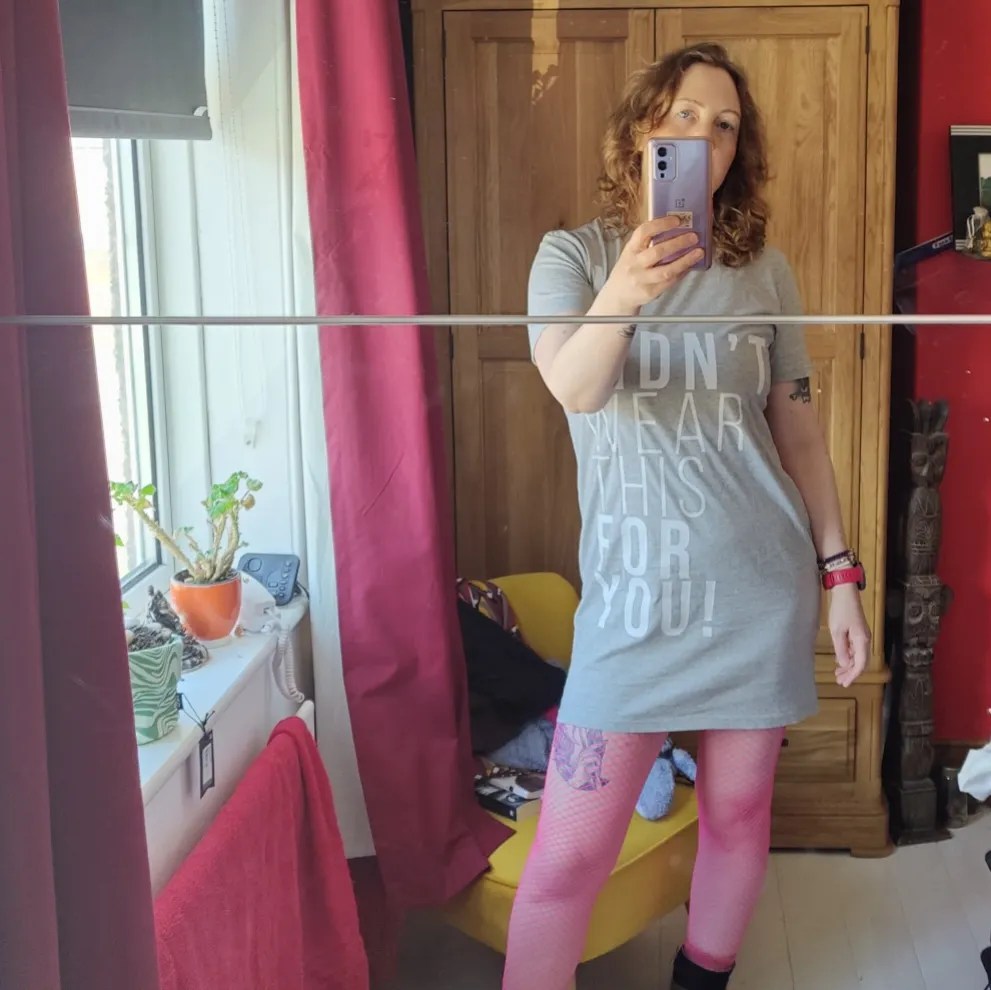
Here’s to rebellious aging! My dress reads “I didn’t wear this for you” especially for all the people who think nearly 50s/ over 50s shouldn’t wear short dresses
If you would like to work with a personal trainer in a quiet setting in Alnwick Northumberland get in touch!
Firstly don’t over complicate it, find something you either enjoy or at least feel comfortable with and do that activity. Doesn’t matter what it is, if you enjoy it and it gets you moving it’s perfect.
This simple act of choosing something you enjoy is really important you can’t commit to something if you feel dread every time you have a session planned.
You might manage to force yourself to run or lift for a few months but if you hate it you’ll quit, guaranteed. Then you’ll be telling everyone you “just don’t like exercise” which isn’t true, you didn’t like that exercise.
In short stop doing xyz because you think it’s good for you, do something you actually like which can be as simple as walking a bit more.
Secondly give yourself a bit of external motivation. This can be anything from a target weight to lift, an extra few seconds off a 5k or a virtual steps challenge.
At the moment one of my external motivations is a step challenge. I’m virtually walking the Pacific Crest Trail with The Conqueror Challenges For me this has huge significance. When my daughter had cancer I read a book called Wild by Cheryl Strayed it was hugely inspirational and an idea from it became my mantra.
While walking the PCT each and every day Cheryl would get up put on her huge back pack she nicknamed “monster” and simply put one step in front of the other. This became a metaphor to me each day I’d get up and put one foot in front of the other while carrying the weight of what was happening in our lives.
Some days just keeping and getting the basics done was a struggle but I committed to every day to keep moving forward. I finished my postgraduate law conversion during the year after her cancer for me that was part of moving forwards.
Because of this to finish the PCT myself albeit virtually will be a huge achievement, quite an emotional one actually. This of course makes getting there important and motivates me to get a few extra steps in. Each of us will find a different why, but I find it really helps to have that extra why.
I personally try to avoid aesthetic or weight loss motivations as they feed into more negative feelings I have but they do work for many.
That’s it, find something you enjoy, give yourself external motivation in some form and have fun with it.
As much as I’d love to have you take up Pilates or yoga I’d be just as happy for you to take up hiking or go to any of the other wonderful classes/ gyms around and find the movement you enjoy. Just get moving 💚
If you would like to work with a personal trainer in a quiet setting in Alnwick Northumberland get in touch!
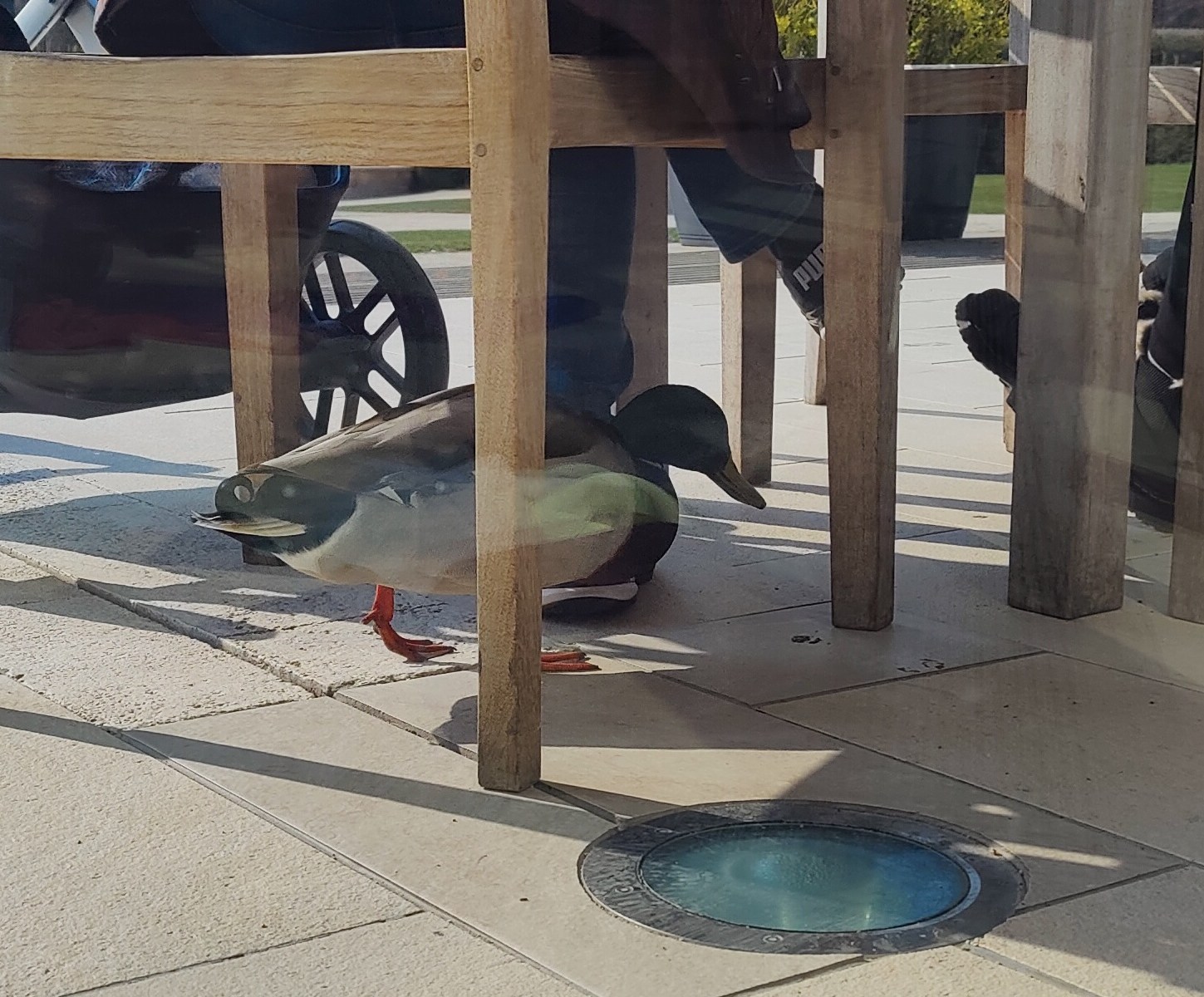
I love teaching any time of the year but Spring is my favourite, especially at Alnwick Gardens where we are surrounded by glass walls that allow you to feel like you are in the middle of the first burst of spring while in a class. The ducks are back, it won’t be long till they have duckings who do seem to enjoy walking through the class! It’s unbelievably cute!
If you would like to work with a personal trainer in a quiet setting in Alnwick get in touch!







 If you would like to work with a personal trainer in a quiet setting in Alnwick Northumberland get in touch!


 Sam Kelly Fitness